
I came across an article on a Wyoming website today that discusses the pressure fish face on some of the West’s iconic rivers. Actually, the story focuses on the North Platte’s Grey Reef section, which is one river I haven’t made it to yet, but the problem affects many popular rivers.
“Almost a quarter of the river’s trout are seriously injured from fishing hooks, the Wyoming Game and Fish Department found after years studying fish in popular sections of the river.”
Christine Peterson, Wyofile.com
In my roughly ten years’ experience of traveling the West to fly fish, the San Juan river below Navajo dam is the worst managed water when it comes to mangled fish. The amount of boat traffic for such a short stretch is unbelievable. I wrote about it recently here.
Conversely, in Wyoming, Flat Creek is possibly the best managed river with the least mangled fish for three reasons:
- No boat traffic
- You have to walk a bit to get to it
- Artificial fly only
It also doesn’t open until August 1, which gives the fish some prime summer days without pressure. I was shocked when I went to check the regs though, that Flat Creek is NOT catch and release only! You are allowed six fish a day, one of which can be a cutthroat over 20″. I caught one about that size the last time I was there and there’s no way I was going to bonk it on the head and cook it. There are plenty of brook trout farther up the canyon that are good eats… if that’s your jam.
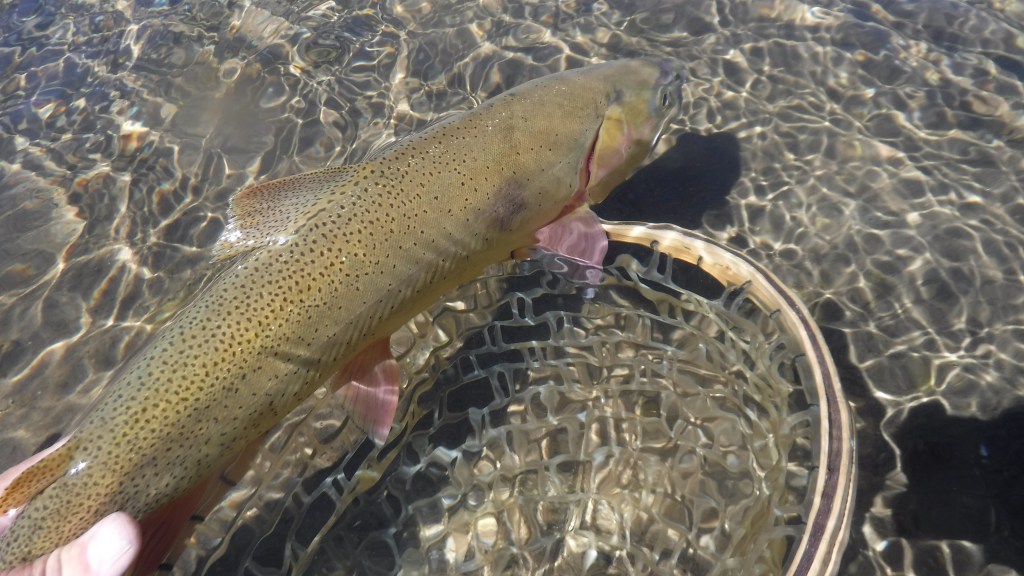
The Gros Ventre river back upstream of Upper Slide Lake is also in good shape (or it was the last time I visited a few years ago) because of the effort it takes to get there. A purposely terrible road!
One commenter at Wyofile mentioned the Henry’s fork as another river that’s suffering, and that one hurts me the most. I look forward all year to the day that I’ll be rolling up Idaho highway 20, making the long pull up onto the plateau and making a left turn into the access point at Last Chance. In 2023, the mood was dour amongst the old timers around campfires at the Gravel Pit. Most agreed that the numbers of fish were way down. Weather-related winter fish kill? Poor management of water flows? Nobody knew, but it probably isn’t boat traffic. The Harriman Ranch section probably has the fewest boats floating by of any of the big waters I visit. And they aren’t chucking bobbers.
You should definitely click over to Wyofile and read the whole article, but one thing that really stood out to me was an estimate that the same fish was being caught multiple times each day…
Tatum also wonders if there needs to be a change in fishing culture. Anglers surveyed on the Platte catch about 50,000 trout a year between the Gray Reef and Robertson Road, Hahn said. Biologists estimate only about 30,000 trout live in those stretches. That means on any given day, anglers are catching the same fish over and over.
Christine Peterson, Wyofile.com
Maybe instead of high-fiving over 20 or 30-fish days and rowing back through a fish-filled run over and over again, Tatum said guides can spend time teaching clients another technique or try a stretch of water that’s a little less productive.
“We’re all out there trying to make a living,” Tatum said. “But you don’t need to backrow a run 15 times and hammer the crap out of them.”
Hear, hear! Kudos to Trent Tatum at the Reef Fly Shop for saying what needs to be said.
I participate in the outdoor economy spending money at fly shops and shopping at the local grocery outlets, but I’ve yet to pay for a guided trip. I’m small potatoes compared to the guys that will drop five or ten grand on a fishing trip. I don’t feel like it’s too much to ask to make them work a little harder for a fish! And the constant urge to grow the fly fishing industry just isn’t sustainable because the fish numbers are declining as the fishers are increasing.
I realize that the guides are busting their asses for not much money, but something has to change if the negative trends are going to be reversed.
It certainly seems like more stringent regulation of the business is going to have to come into play to reduce the pressure on the fish. Limiting back-rowing seems like a reasonable place to start. But even without boats, the section of the Madison above Lyon bridge is still absolutely hammered.
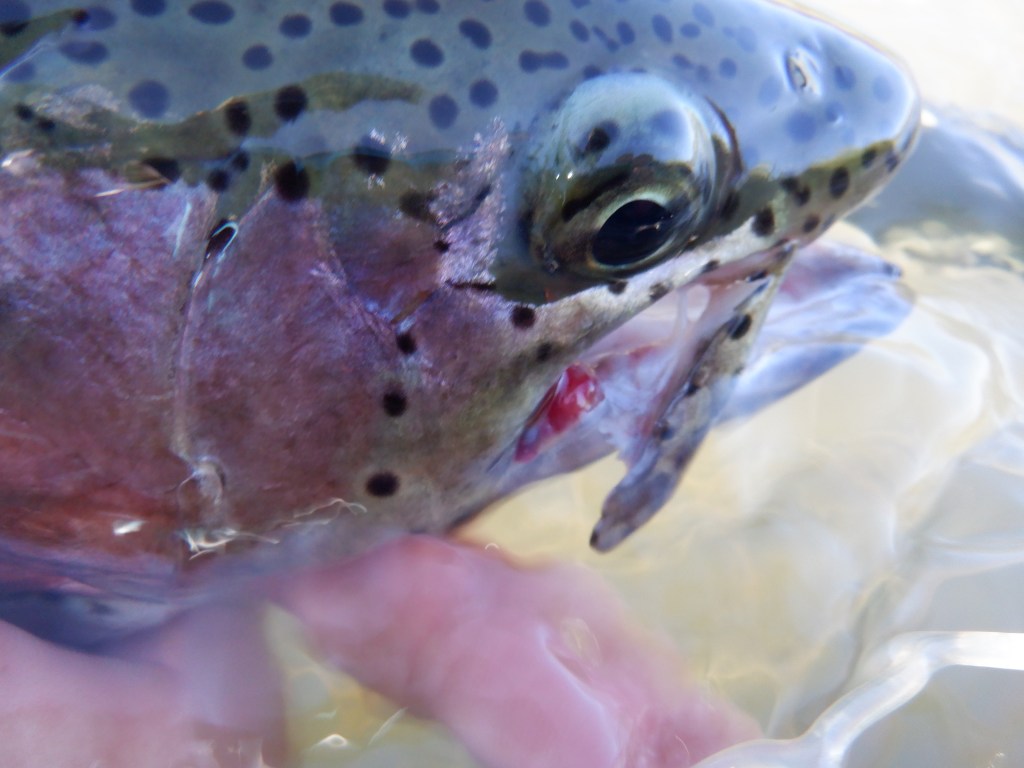
What about scheduled closures? Give the fish a week off now and then? Hard to manage, for sure. Every tourist that walks up the river has to see the sign saying “Closed to fishing every third week of the month”, and be smart enough to understand what it means. Maybe even close 2-3 days a week? Does that just ramp up the number of anglers on the open days?
I’d be willing to go so far as to consider a bobber ban on some stretches of water, for some part of the season, say, no indicator fishing in July or August. Why use nymphs when the fish are eating hoppers? If you’re not allowed to use a Rooster Tail with a treble hook, why not ban Perdigons? (I’m in the Kelly Galloup camp on Euro nymphing)
I’ll be heading to Idaho and Montana in June, if I’m lucky, and I’m going to try and seek out some less pressured water this time around. But I’m certainly not going to pass by Last Chance without getting my feet wet. What do you think can be done to help improve the situation, without putting guides out of work? Scroll down the page and share your thoughts in the comments.
Some interesting related material:
 TRAVELINGWITHTOOLS
Leave a comment