
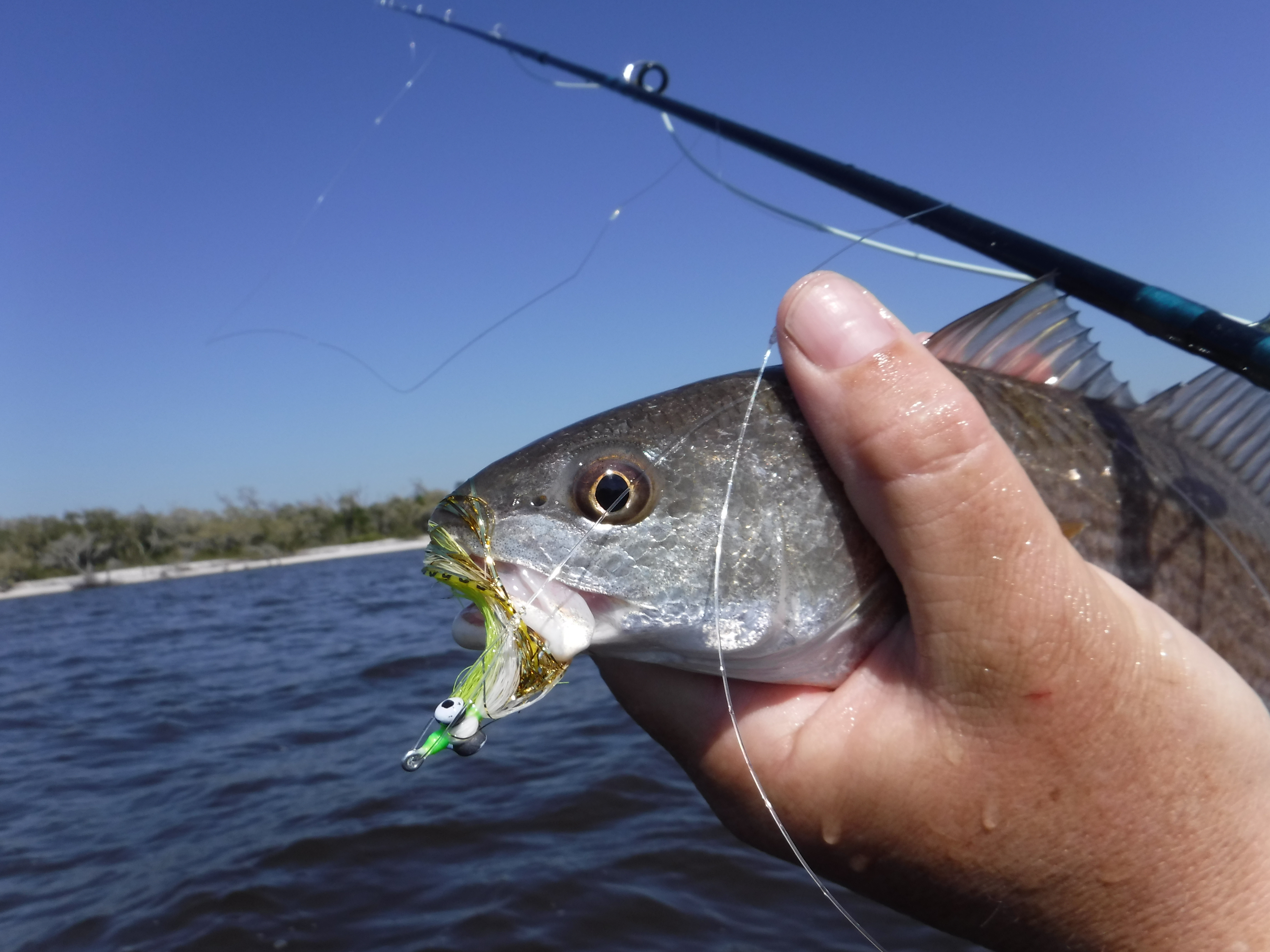
In 2019, I spent a few winter months pursuing Texas redfish on the fly from North Padre Island eastward over to Matagorda Bay. I caught plenty of small puppy drum blind casting into murky water, but the goal of sight fishing to big reds in clear water was elusive. I did finally find those fish at the end when the water was warmer, but more often I found a speck on the end of my line.
According to Wikipedia…
Spotted seatrout (Cynoscion nebulosus), also known as speckled trout, is a common estuarine fish found in the southern United States along coasts of Gulf of Mexico and the coastal Atlantic Ocean from Maryland to Florida. While most of these fish are caught on shallow, grassy flats, spotted seatrout reside in virtually any inshore waters, from the surf of outside islands to far up coastal rivers, where they often come for shelter during cold weather. Contrary to its name, the spotted seatrout is not a member of the trout family (Salmonidae), but of the drum family (Sciaenidae). It is popular for commercial and especially recreational fishing in coastal waters of the southeastern United States. Adults reach 19-37 inches in length and 3-17 pounds in weight.
https://en.wikipedia.org/wiki/Cynoscion_nebulosus
I first came across these bitey torpedoes at the end of my trip around Florida in the winter of 2015/2016. That was another adventure with long gaps between fish, and maybe the lesson should have been, “don’t waste too much time fishing the Gulf coast in winter!”
But in March, up on the peninsula at a place called Escribano Point, I found some nice trout. In fact, that was the best day of the almost five months I spent on the Florida Coast. I also caught redfish, striped bass and even a catfish! All on the chartreuse and white Clouser minnow.
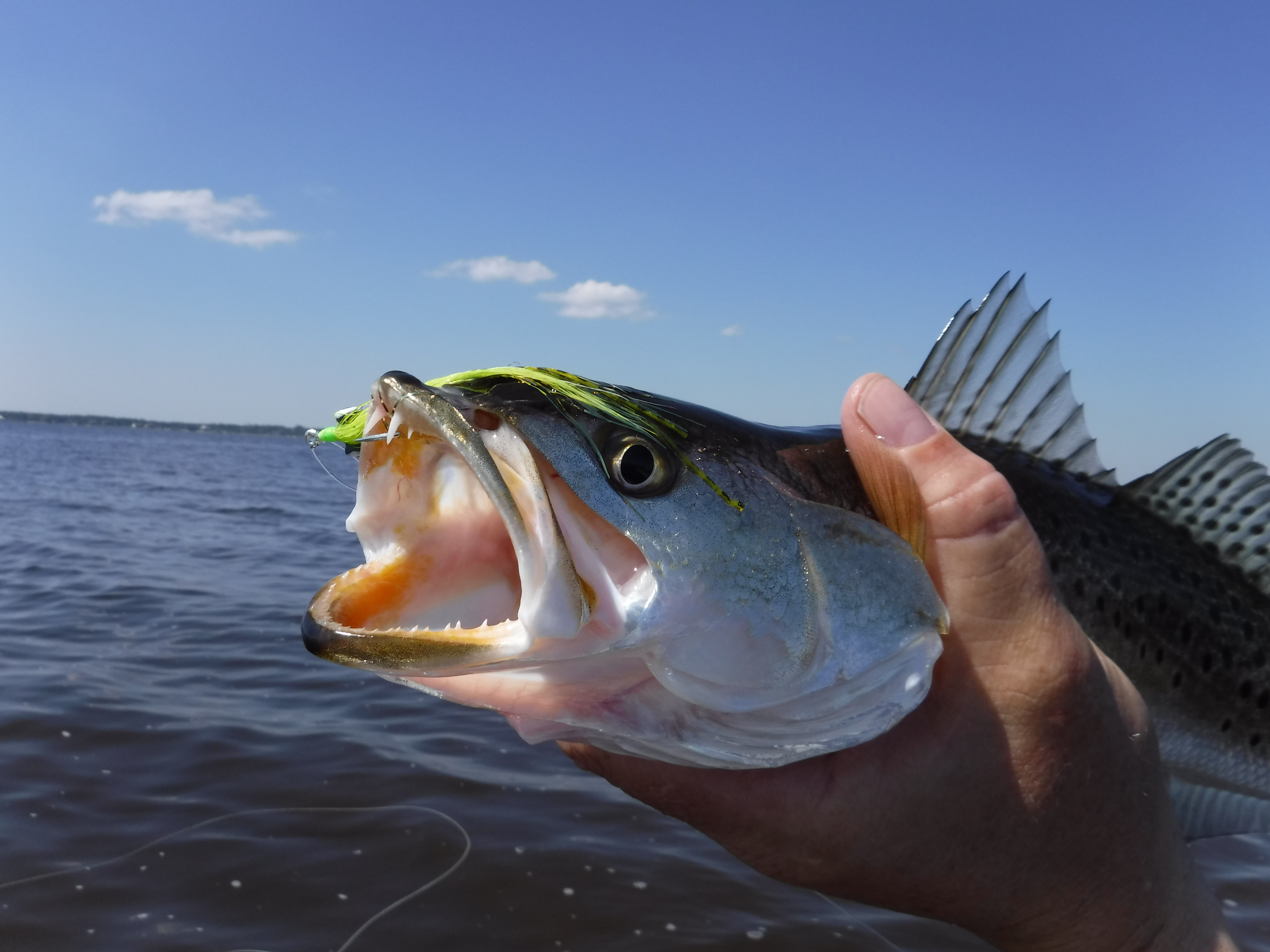
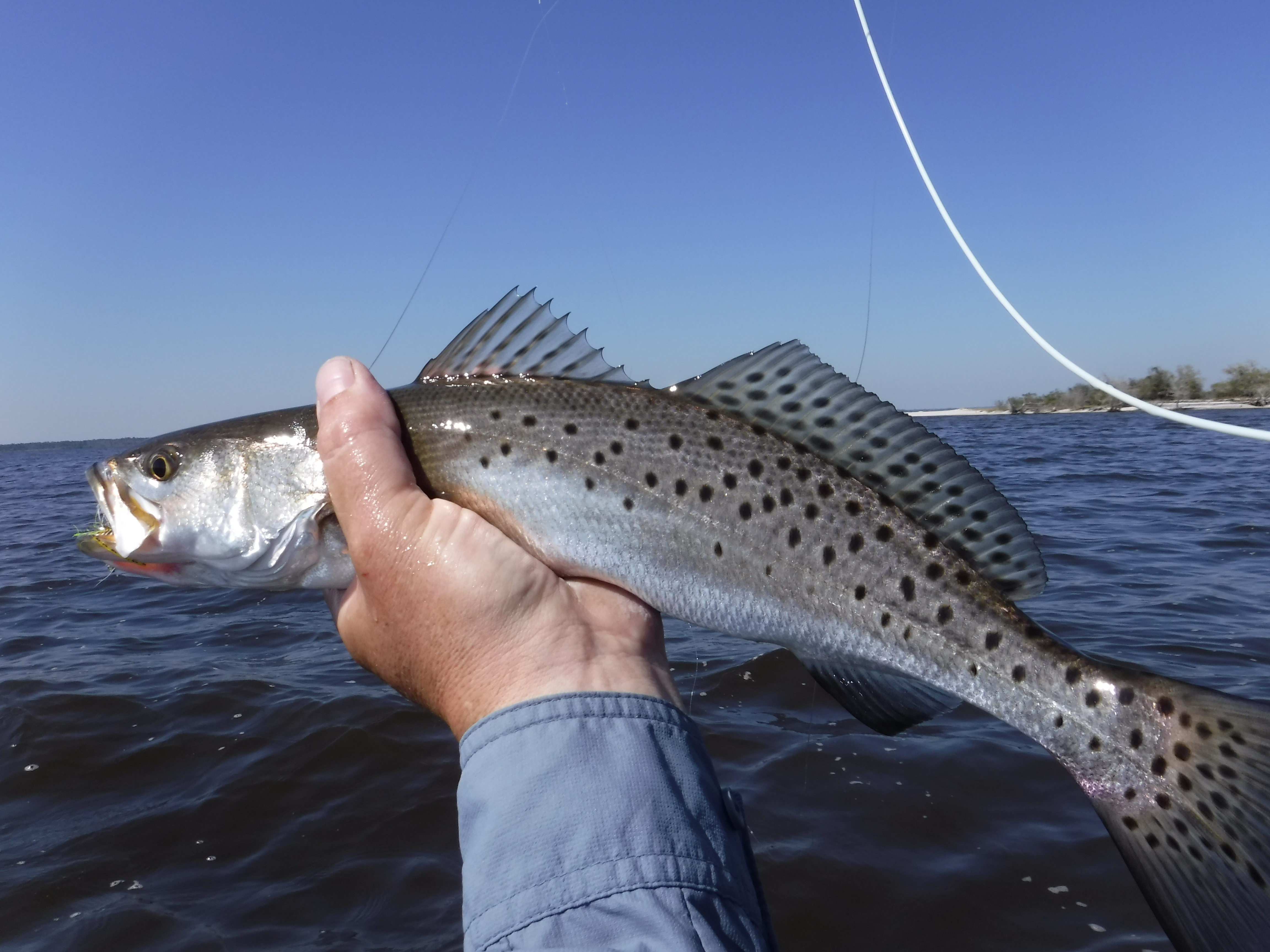
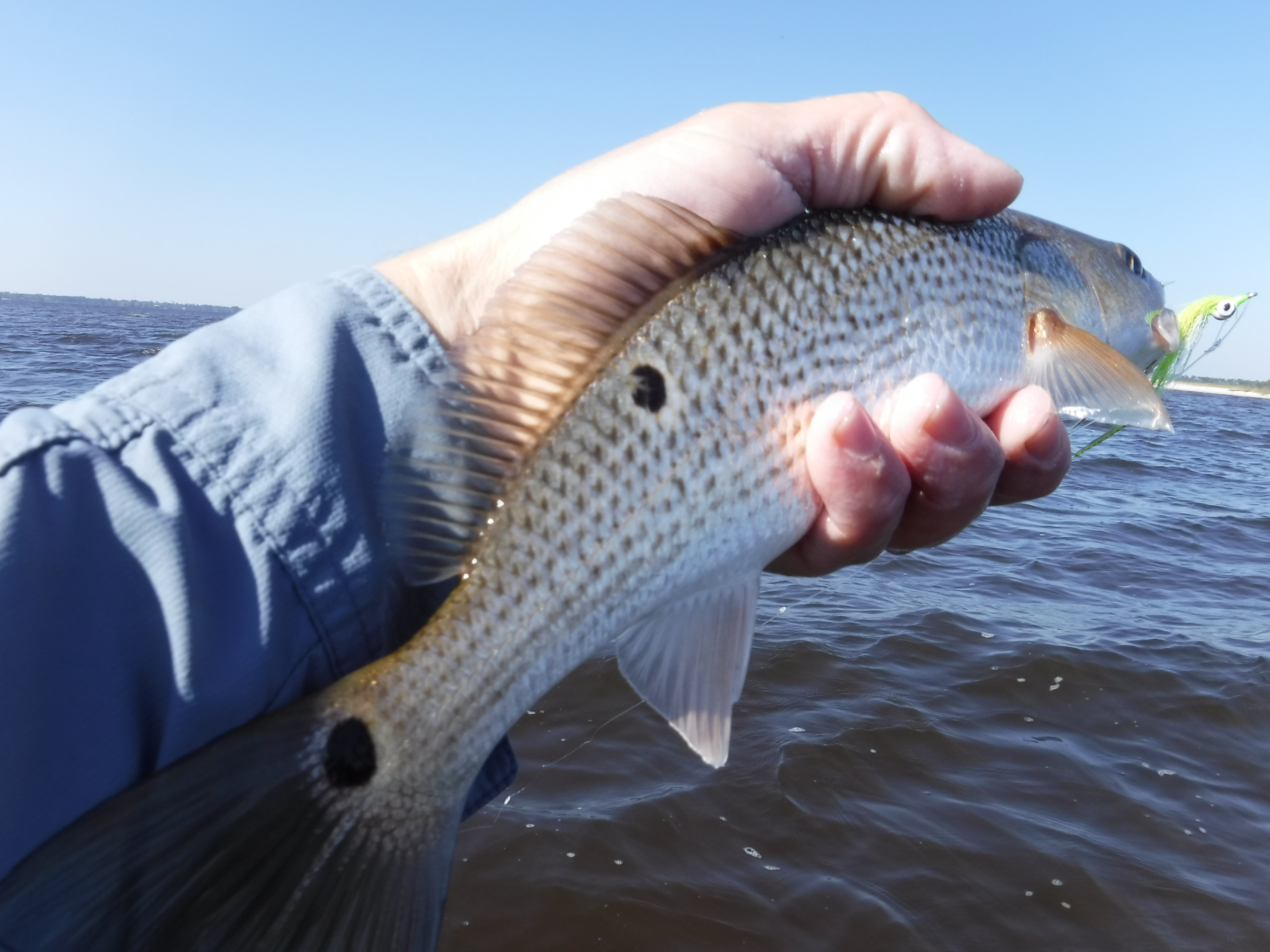
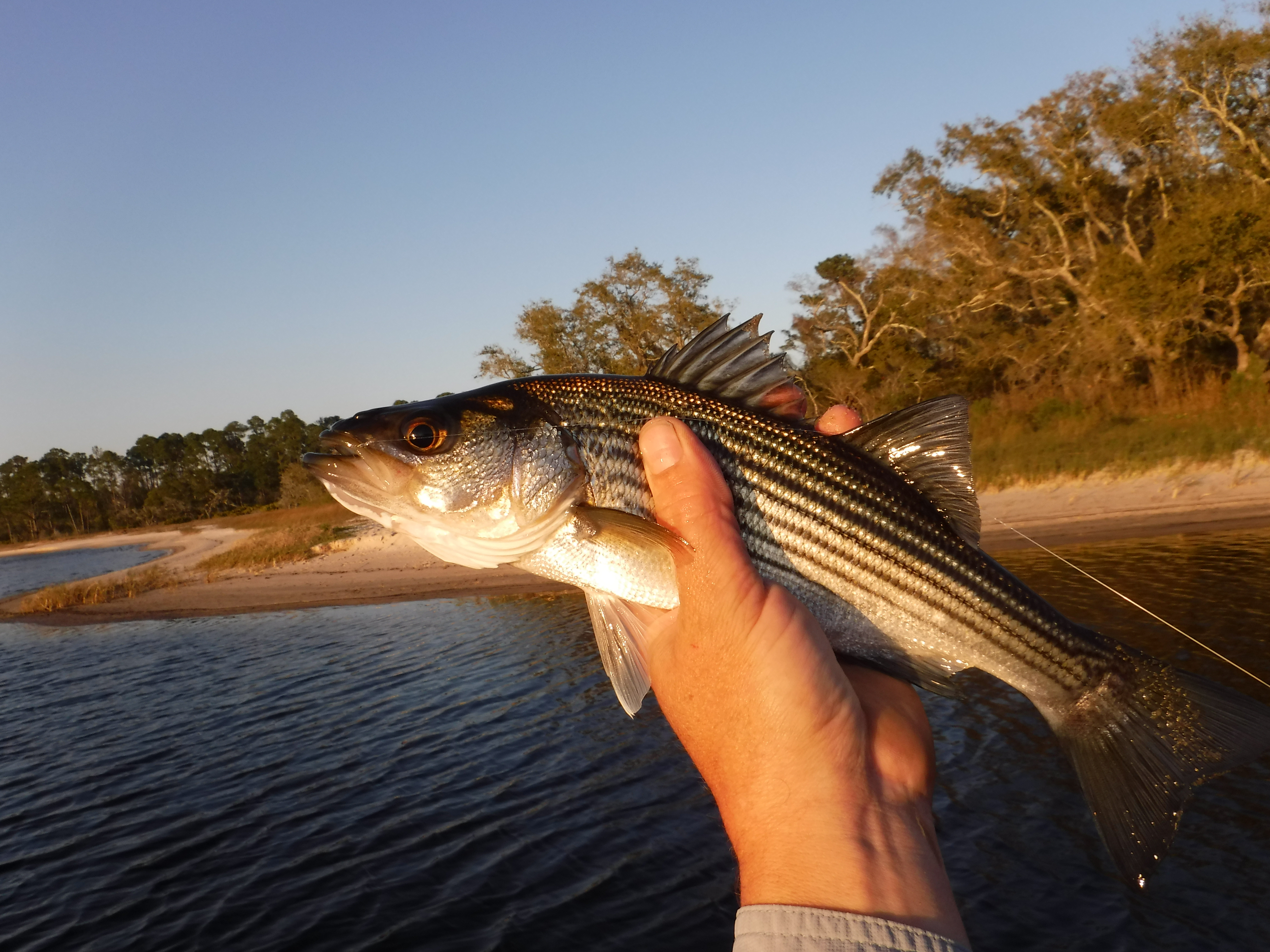
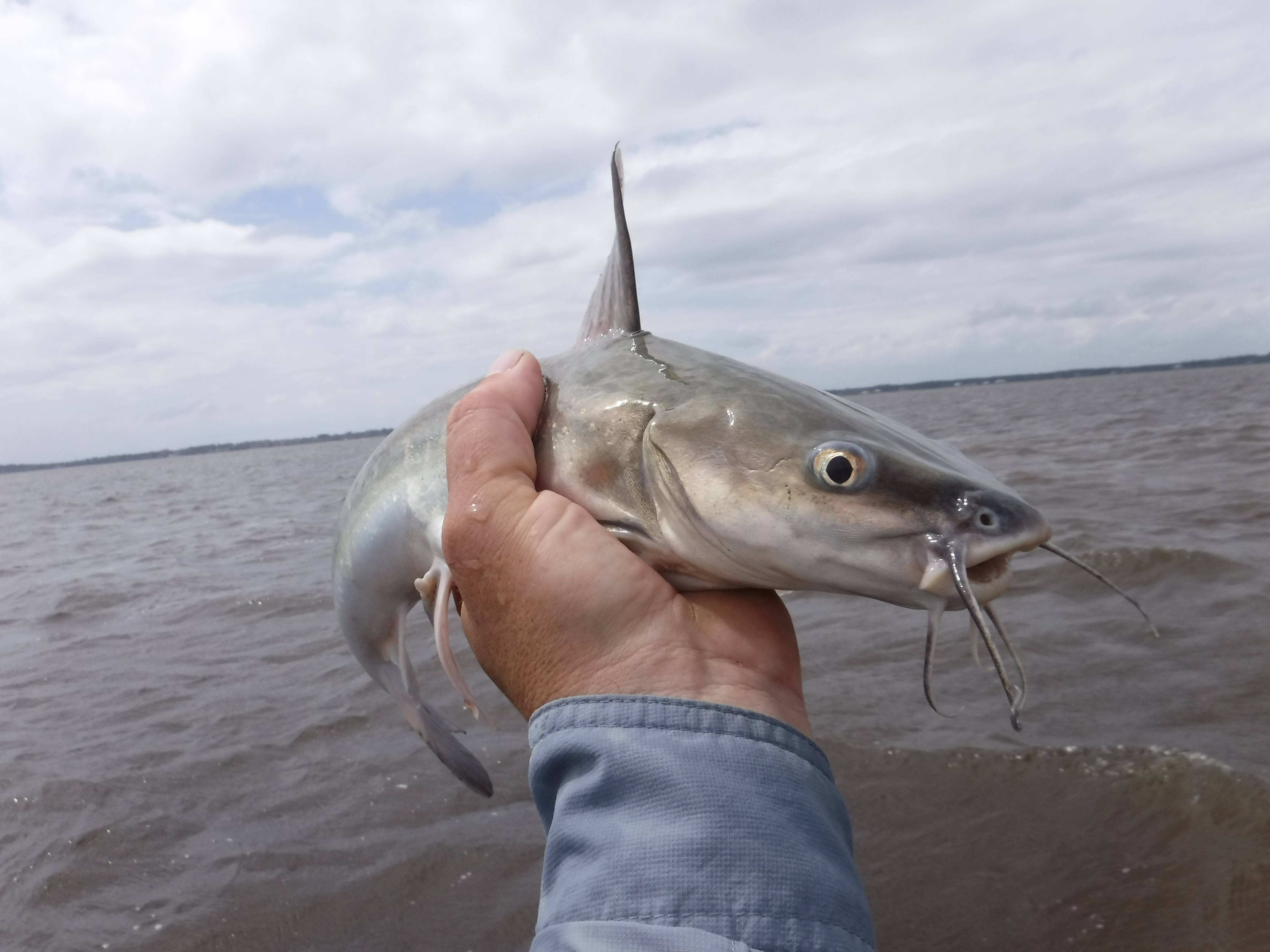
Three years later, the Texas coast produced far more consistent action, even if the big fish remained elusive. I was told that the speckled trout could be caught in XXX-L sizes. For example:
As for what flies to use, the Texas specks really liked the Seaducer variant that I tied up on that trip. Four long hackles, two plain grizz and two brown, with white bucktail, pearl estaz, and a couple big webbly schlappen hackles palmered at the front. Oh yeah, and rubber legs. Gotta have rubber legs!
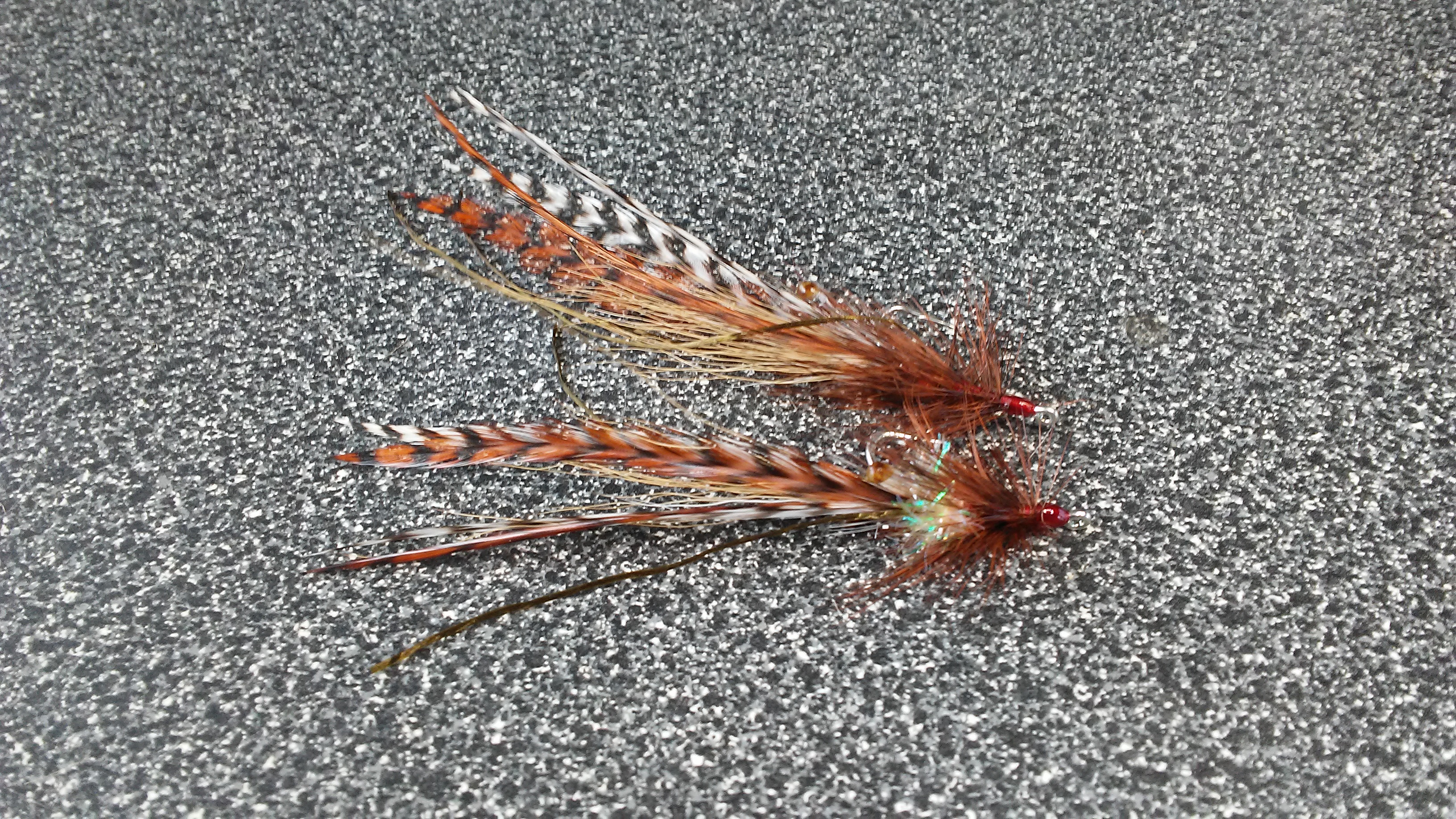
The Grizzly Seaducer with parts of a Pats Rubberlegs and parts of a Clouser Minnow. Plus, shrimp eyes! 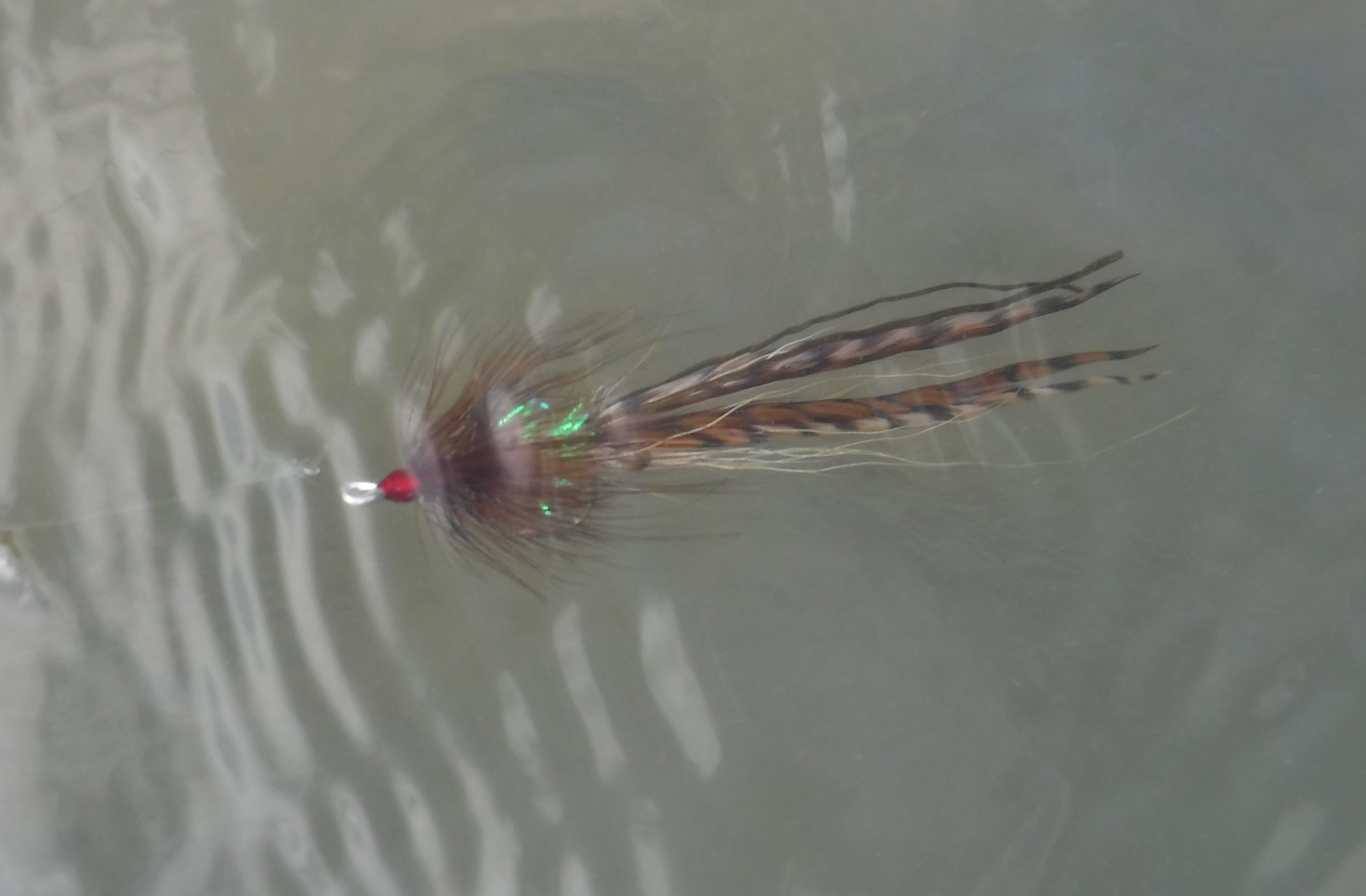
One variation on the grizzly seaducer theme that worked most of the time. 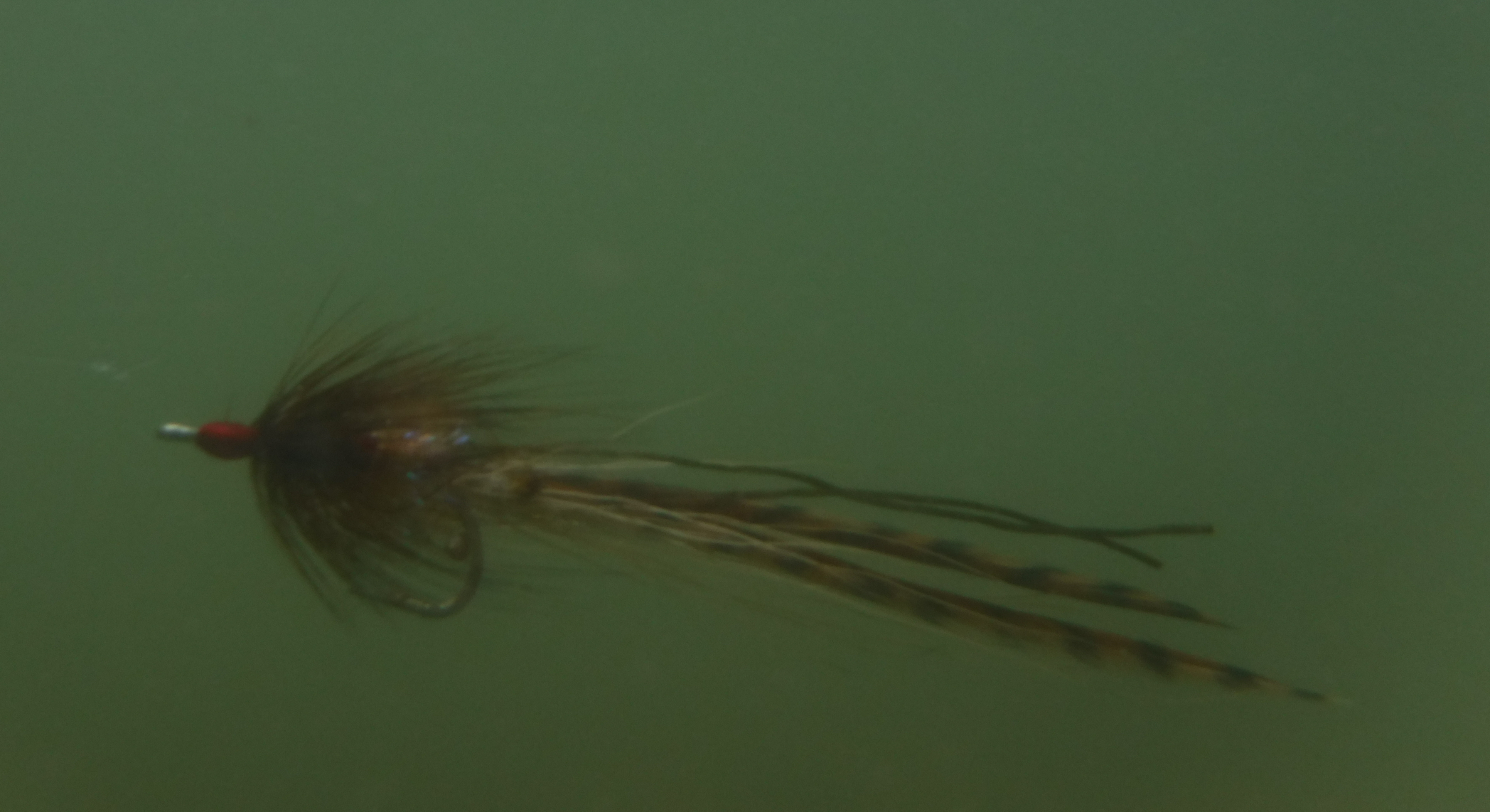
Lots of swimmy motion and the big collar pushes water. 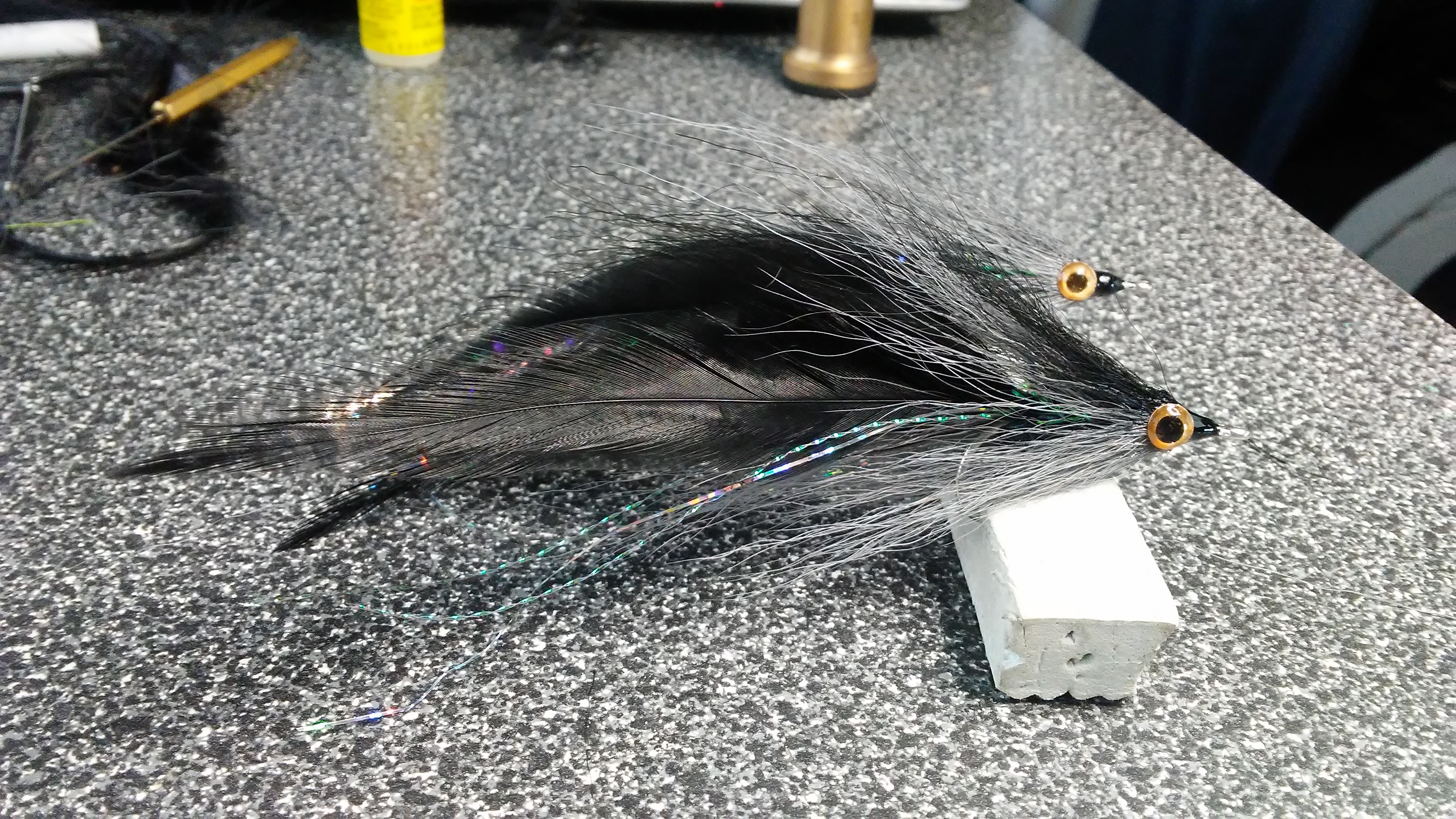
These particular Half n Half flies didn’t catch fish, but other black ones did.
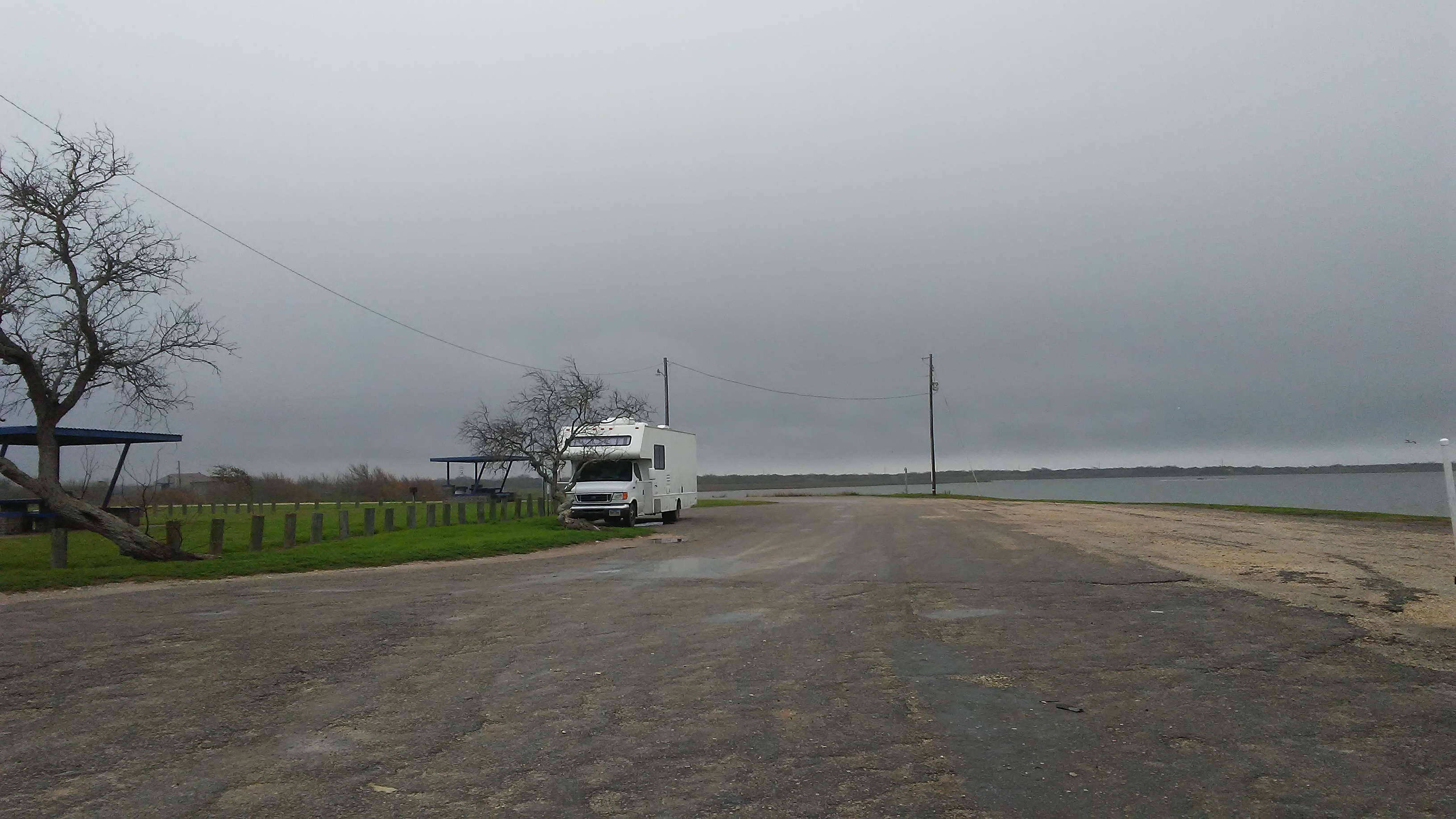
Some of the best seatrout action I had in Texas came from the breakwater in Haterius Park in Olivia. The weather was crummy, but that’s generally good for fishing and it held true the days that I fished there. It was nice to be able to cast from shore without having to trudge through a mud flat or cast across an oyster bed, for a change. And the added elevation of the seawall meant I could bomb longer casts out into Keller Bay. Also, free camping for five days!
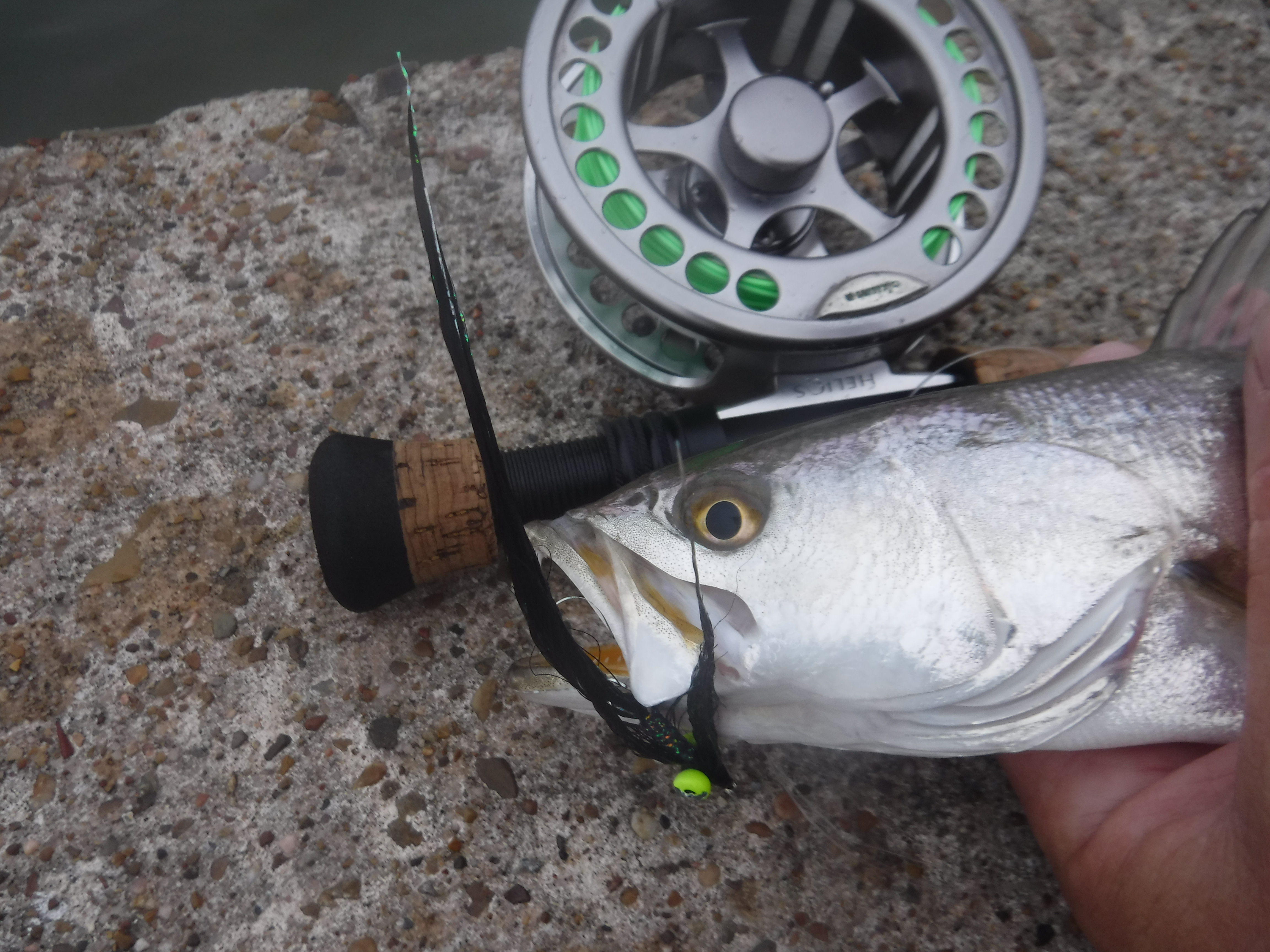
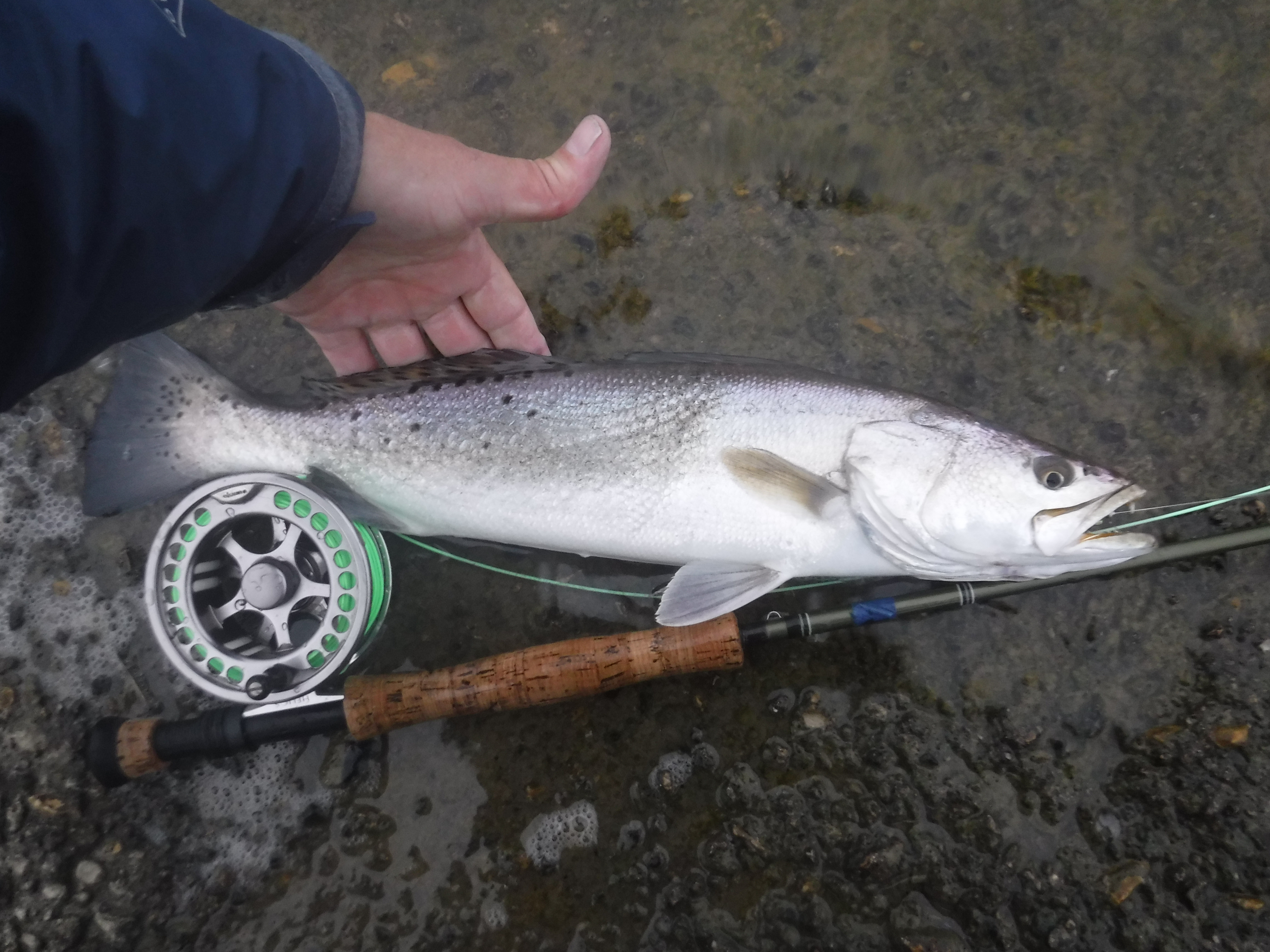
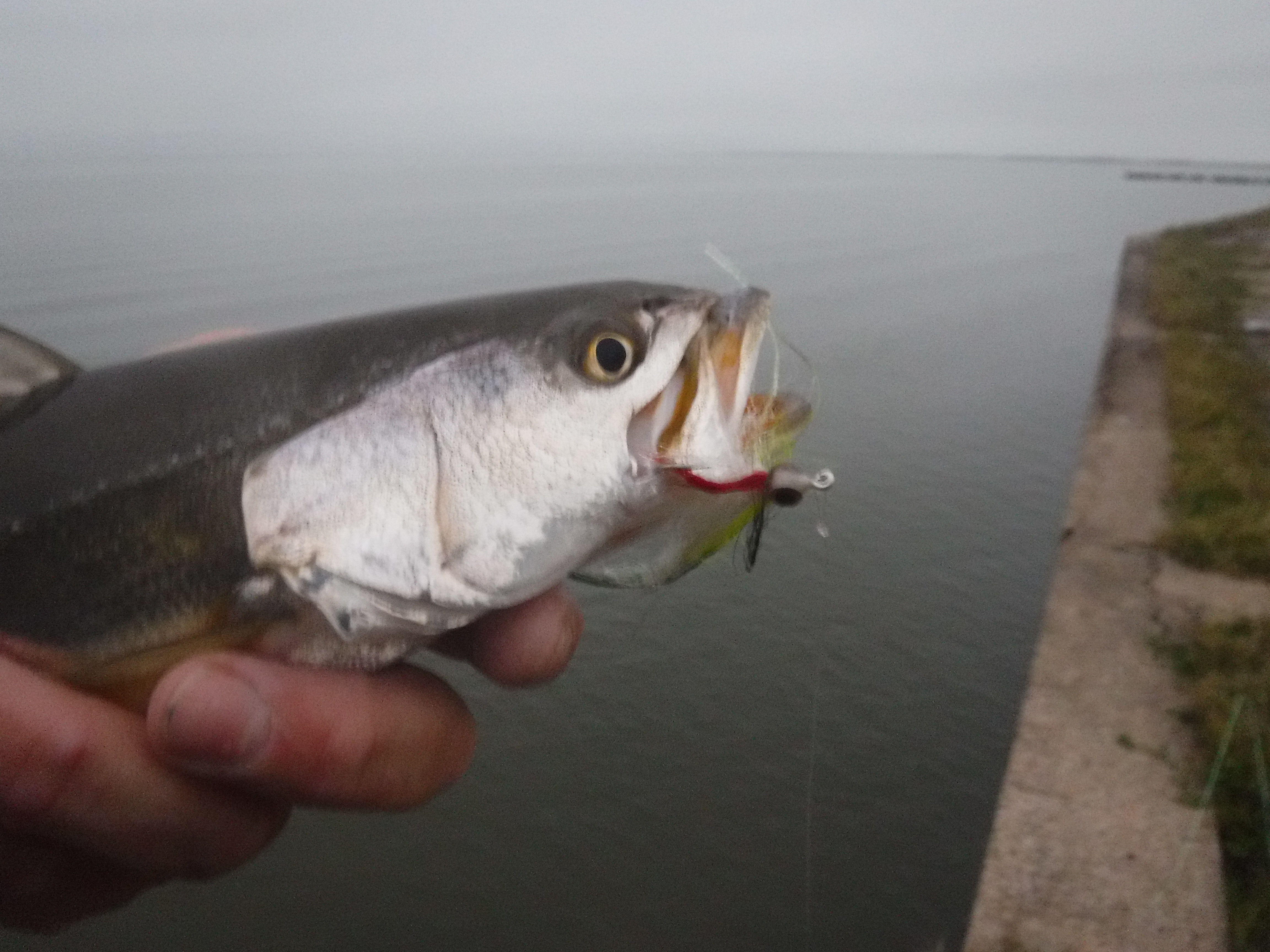
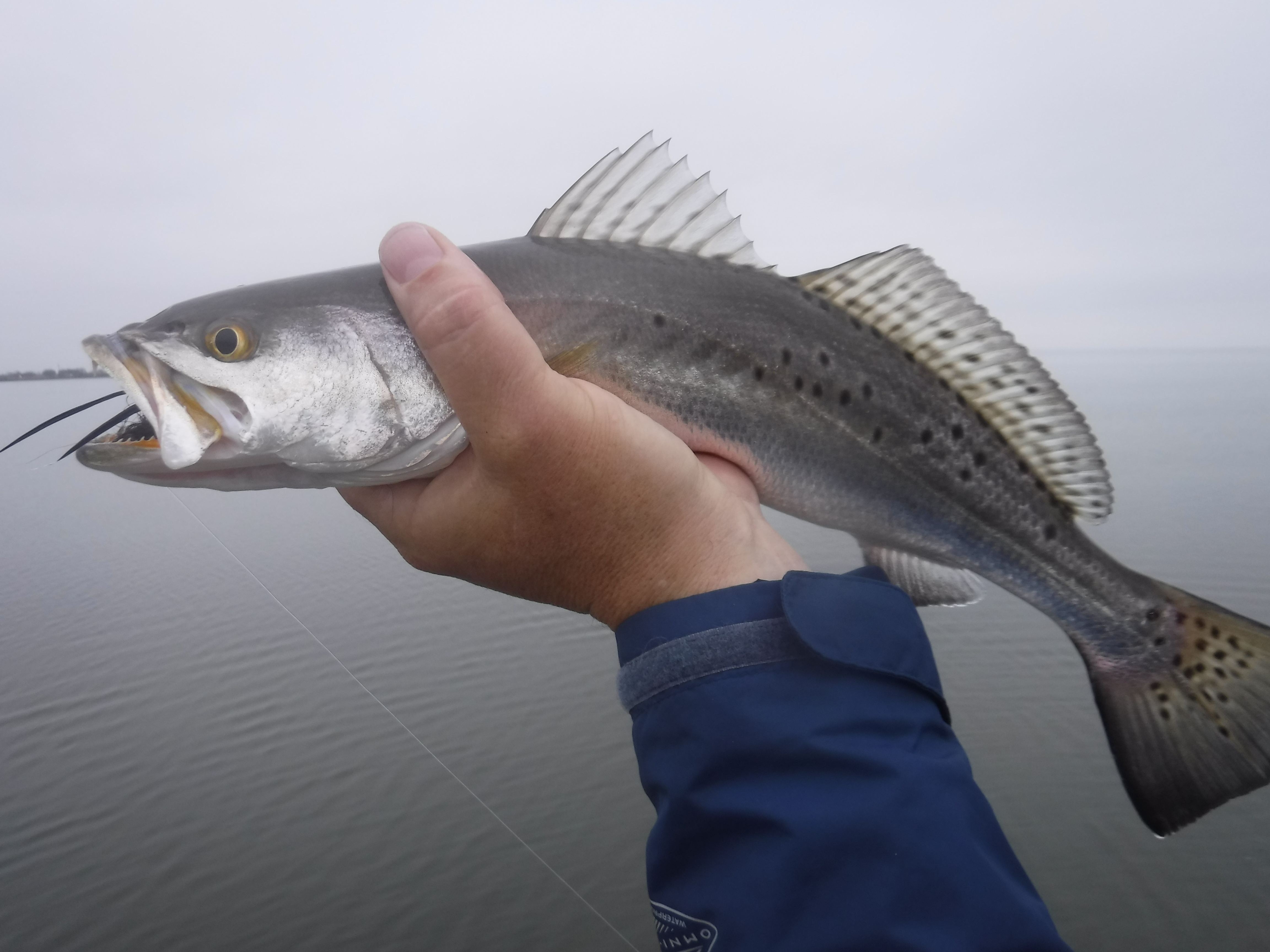
While searching for big reds in Redfish Bay, right next to Port Aransas, I came across a hole that held specks every time I paddled by it. The reds might not have been playing, but the trout were willing, if on the small side.
At the time, free camping was allowed for three nights at a time along the causeway. When I called the Aransas Pass permit office, they told me to call the police to let them know if I would be staying longer. Very neighborly!
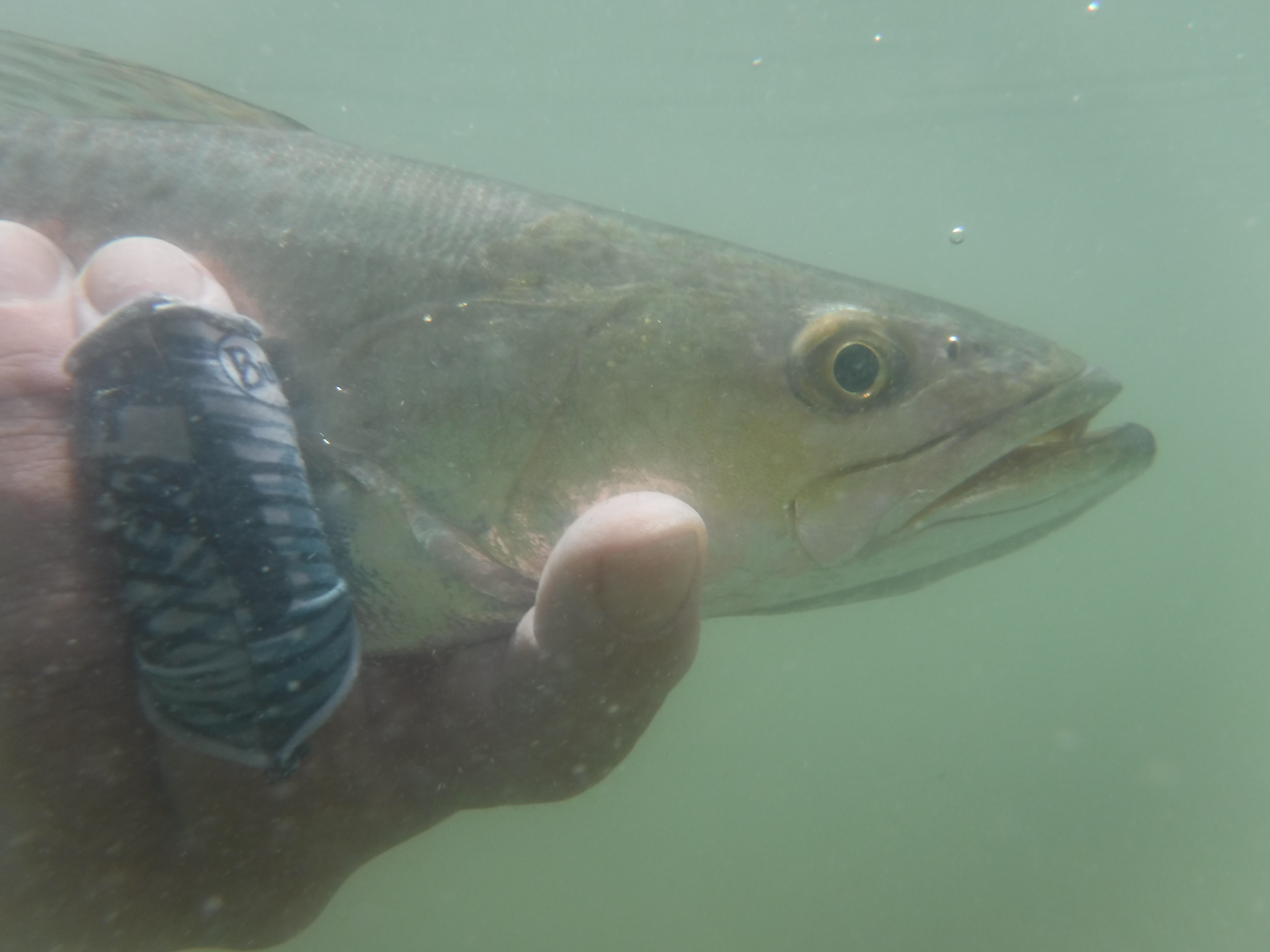

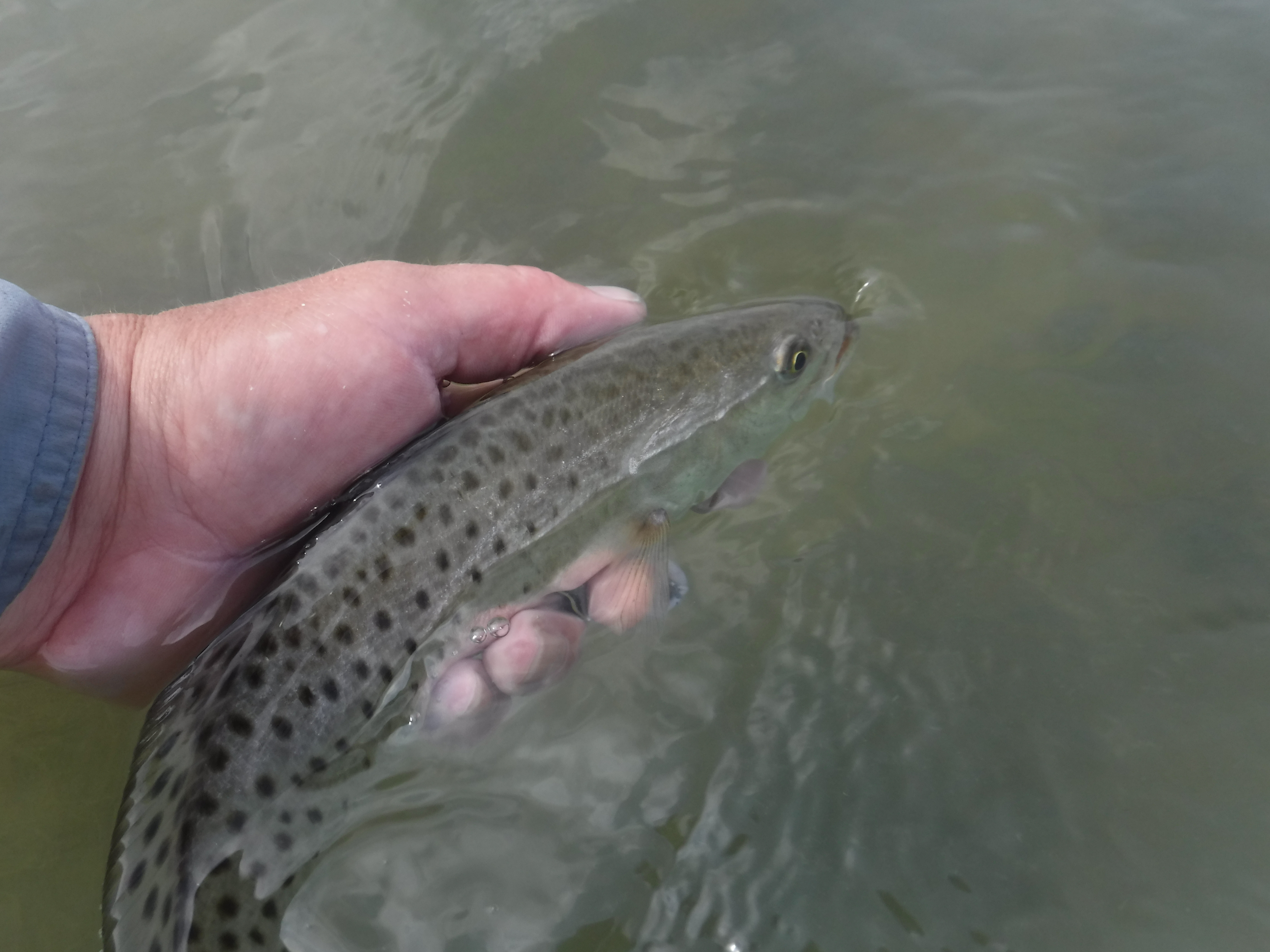
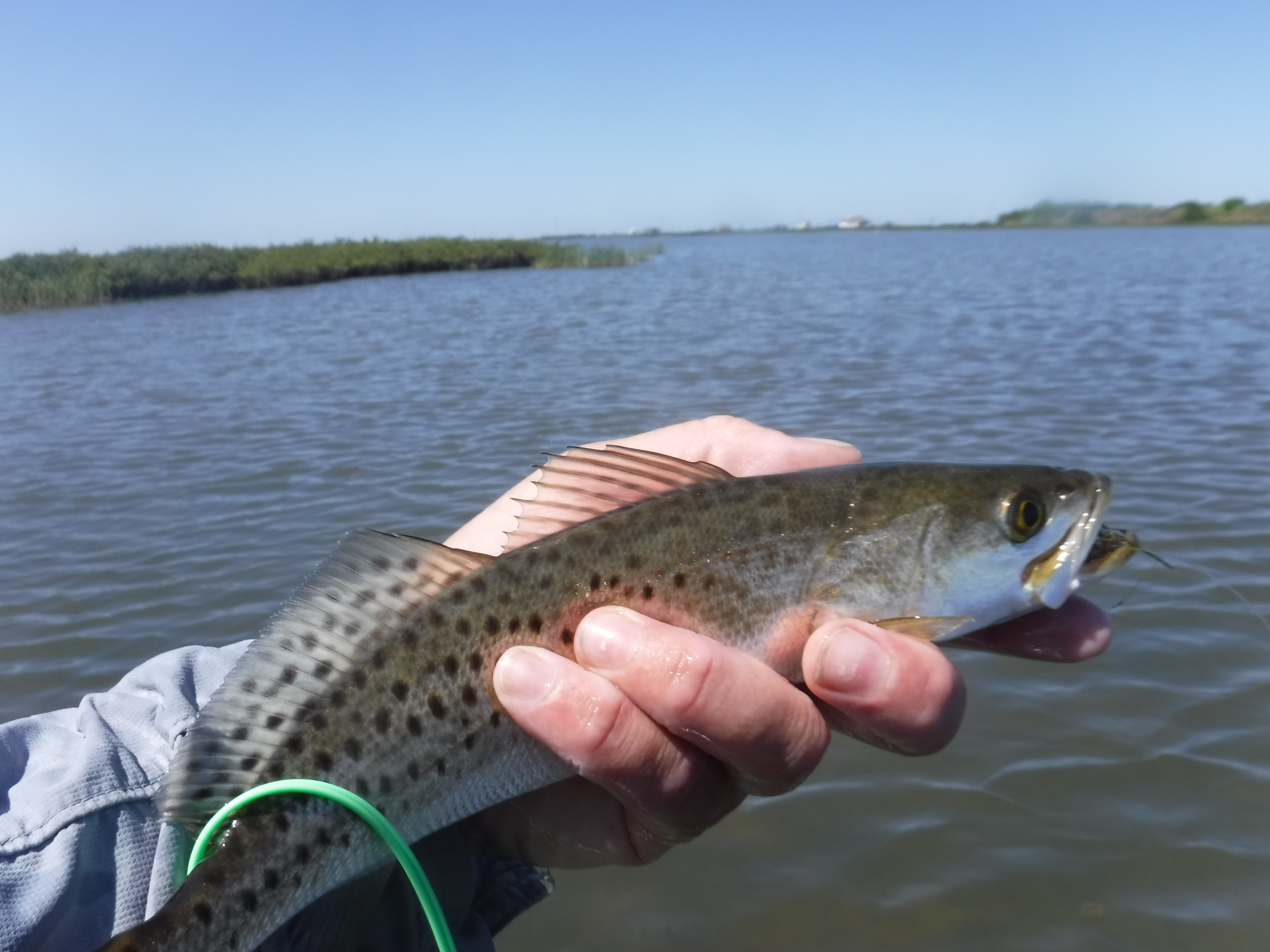

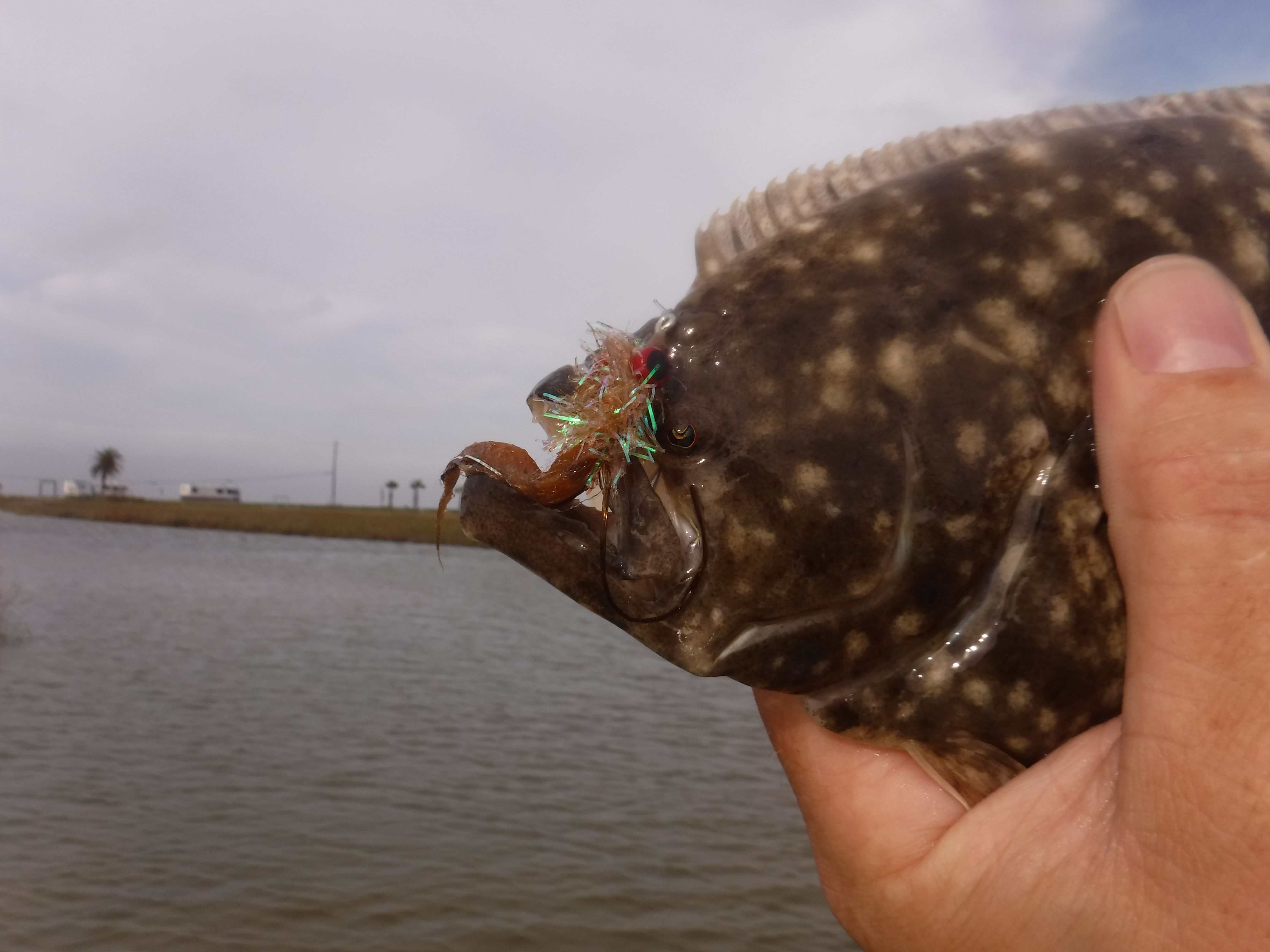
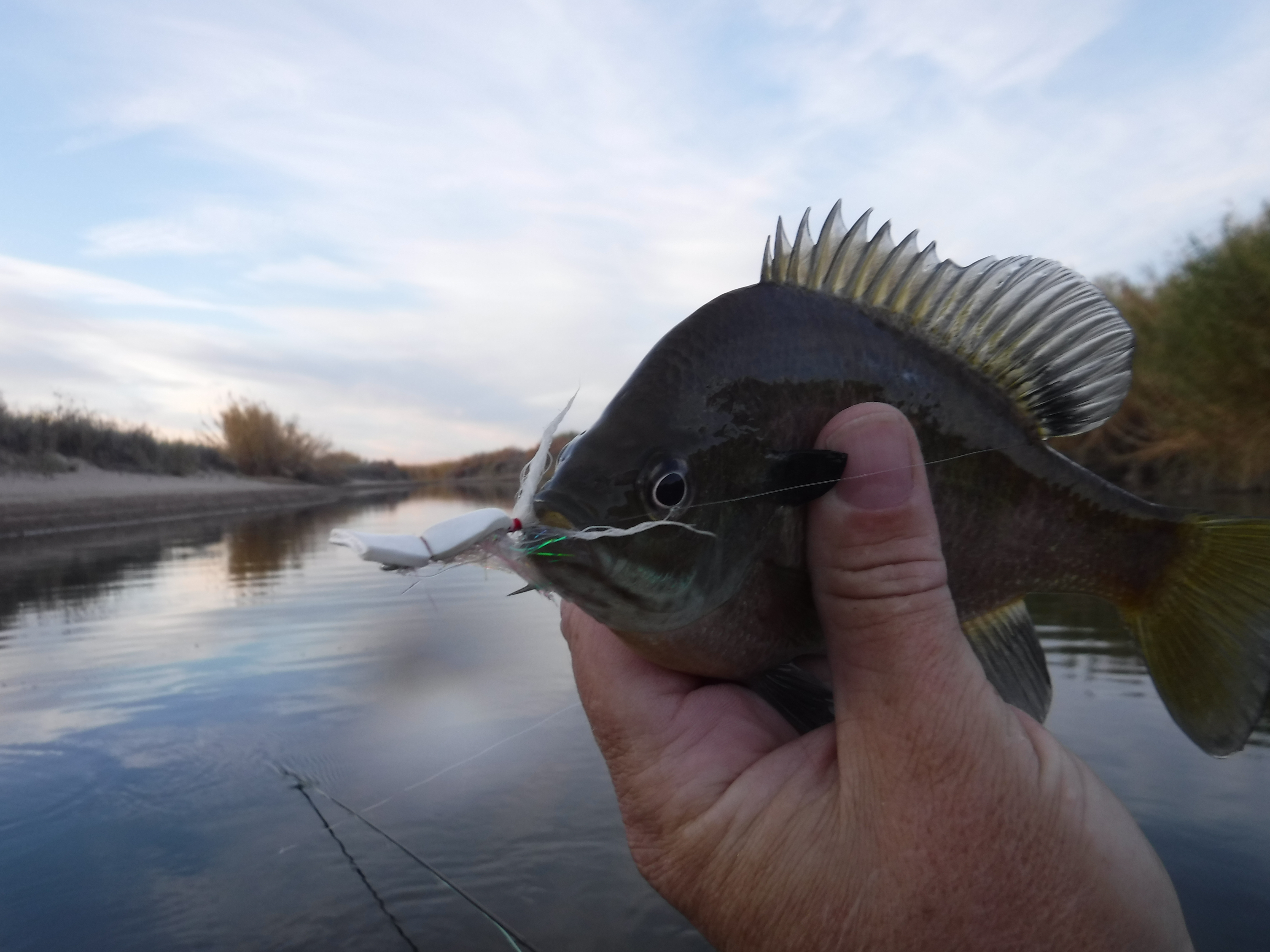
I spent about four weeks at different times at Magnolia Beach near Port Lavaca, and while I did not catch many sizeable fish there, there was constant action for smaller reds and trout. I also found a predictably reliable technique for catching flounder, which was a new species for me on the fly rod. Most of the fish were caught in the inlet to Old Town Lake, but occasionally fish would get active in the surf zone of the beach. I was even able to get some to eat a topwater fly, a white gurgler. It’s funny, I tied those flies in Florida and had one good afternoon catching ladyfish from the causeway in Tampa Bay, but for the most part, those white gurglers have caught bluegill!
Also, more free camping.
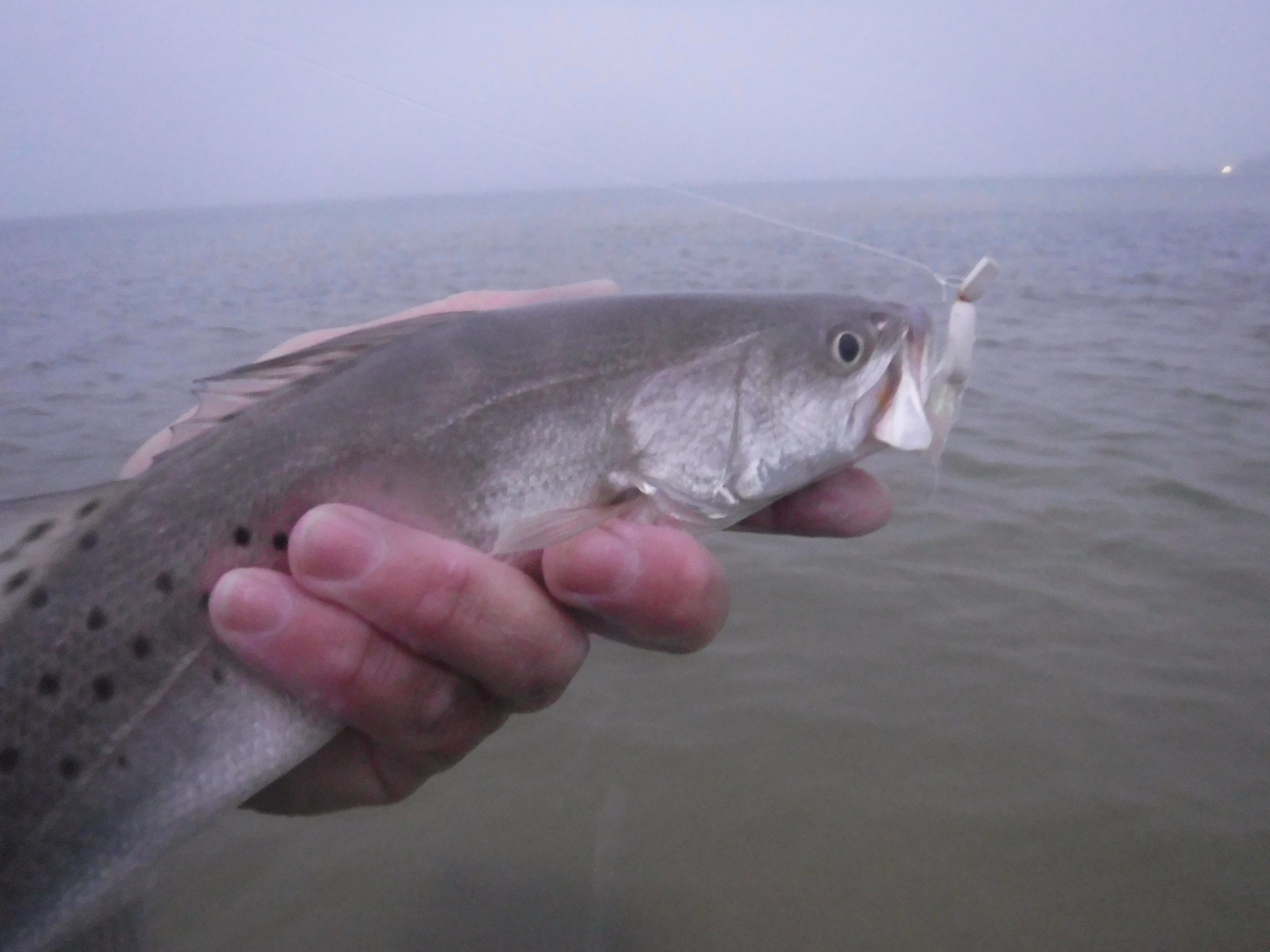


Overall, the trout were fun to catch and would eat whatever fly I put in front of them, but it is certainly a different game from sight fishing for reds. If I ever find myself on the Texas coast again, I’ll definitely spend some time searching for the big gators, as they are called down that-a-way.
Got any questions or hot tips to share? Hit the comments below…
 TRAVELINGWITHTOOLS
Leave a comment