
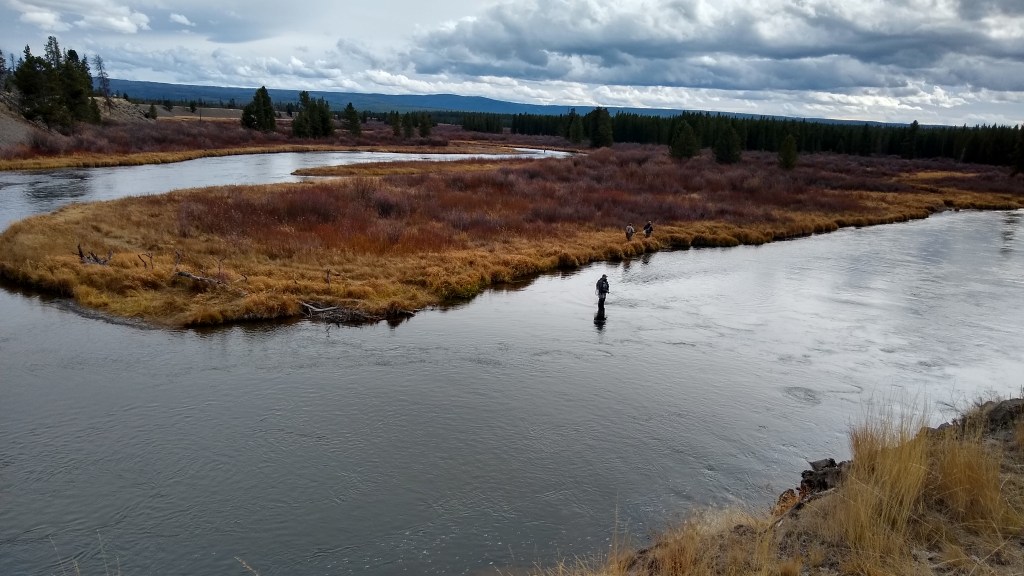
I’ve got a story simmering about the experience of fishing the Madison River above Hebgen lake in the Fall and it just isn’t coming together the way I want it to yet. In the meantime, let’s take a look at some of the flies that I’ve tied for that event, in West Yellowstone, Montana.
Probably my favorite fly for that water at that time of year is the Bakers Hole Bugger, which is illustrated in the lead image above. Why? Well, probably because I always stay on the river at the Bakers Hole campground until they close for the season, and I caught my first really nice brown trout on a swung soft hackle right there in the first bend of the river, a few steps from the motorhome. The yellow and brown colors of the marabou and saddle hackle faithfully represent the season and the atmosphere of the river at that time of year. It just feels right.
I’ve seen the design attributed to Craig Matthews at Blue Ribbon Flies, but the description on their website says Steve Smith is to thank for the pattern. The one they sell has a grizzly hackle run through the yellow and brown chenille, but I like to tie it with brown and yellow hackle, and maybe that’s the difference between the two tier’s designs. I’ve also tied it with white rubber legs in a girdle bug style, and that works great too. For me, the brown and yellow hackle is a carryover from the Platte River Spider that I learned about a few years earlier in Colorado.

Blue Ribbon Flies has always been my go-to shop in West Yellowstone, though Arrick’s was a close second until they had to shut their doors. I think it’s a damn pizza shop now. He’s still in business, just without a retail storefront.
Some of the newer shops in town have more of a bro-culture vibe these days. Of course you can go to Bob Jacklin’s if you really want to stand around and shoot the shit with the old timers! (Even the website is old school).
There are really only three basic flies that have worked for me on the Madison in September and October. The woolly bugger variants like the one just described, an unweighted soft hackle of some sort, and the dirty sort of flies at the end of the list when nothing else is working, the worms and eggs.

Last season I tied up some Zirdle Bugs, which are a cross between a Zonker and a Girdle Bug, though Pat’s Rubberlegs are a tried and true fly on the Madison all year long and I think of the Zirdle as a hairy Pats. I tied the chartreuse ones with a double tungsten bead for my heaviest fly and the olive ones with no bead but a lot of lead-free wire. Guess what, neither one caught a fish last year! Harrumph. I lost most of them to snags on the bottom.
My winning soft hackles have typically been a variant of a Shakey Beeley, and I think the orange thorax is the key to these flies, as the fish could be seeing it as an egg in the drift. I think I’ve caught more fish on a variant with pheasant tail bodies rather than the cream and brown of the original design.

The Shakey Beeley soft hackle, with orange ostrich for the thorax. 
I’ve spent a LOT of time swinging a Bakers Hole soft hackle, without any memorable fish to show for it… 
A fairly generic soft hackle with a hint of purple in the thorax. 
A variation of the Bakers Hole soft hackle with a grouse feather. 
My Pheasant and Orange version on the left and Blew on Blues on the right. 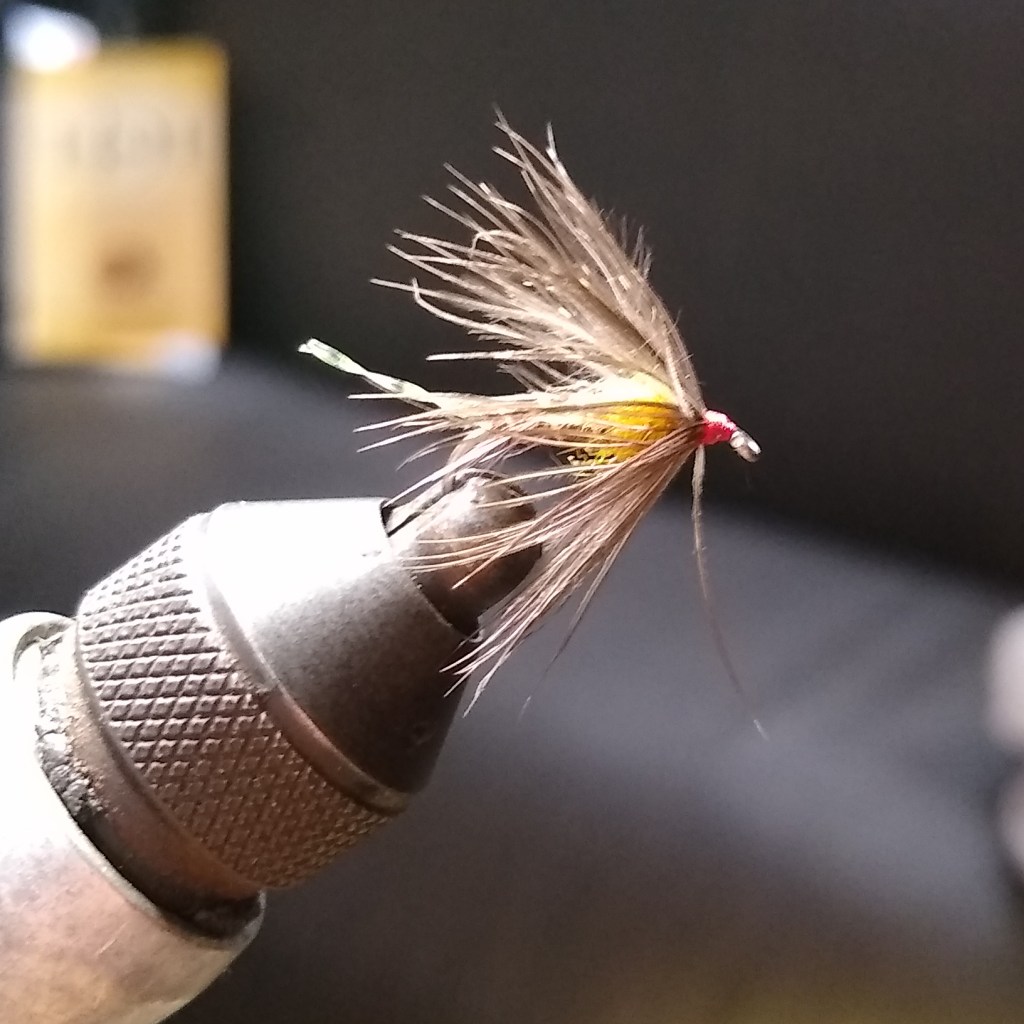
A Grouse and Orange version. 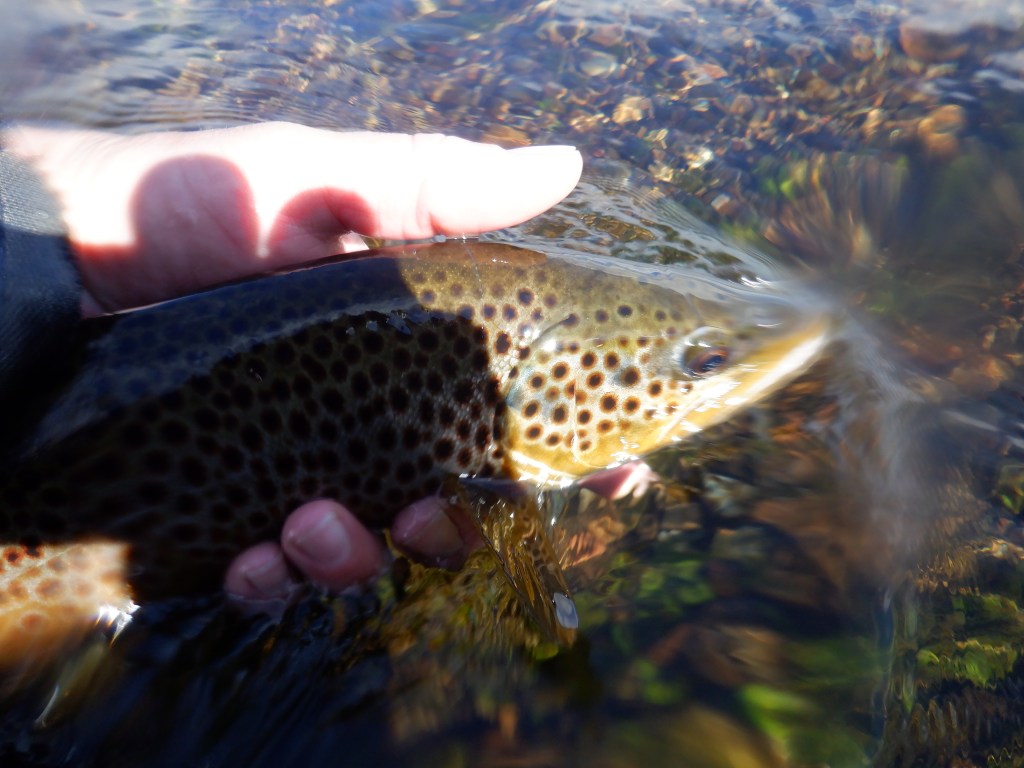
The prize on the end of the line.
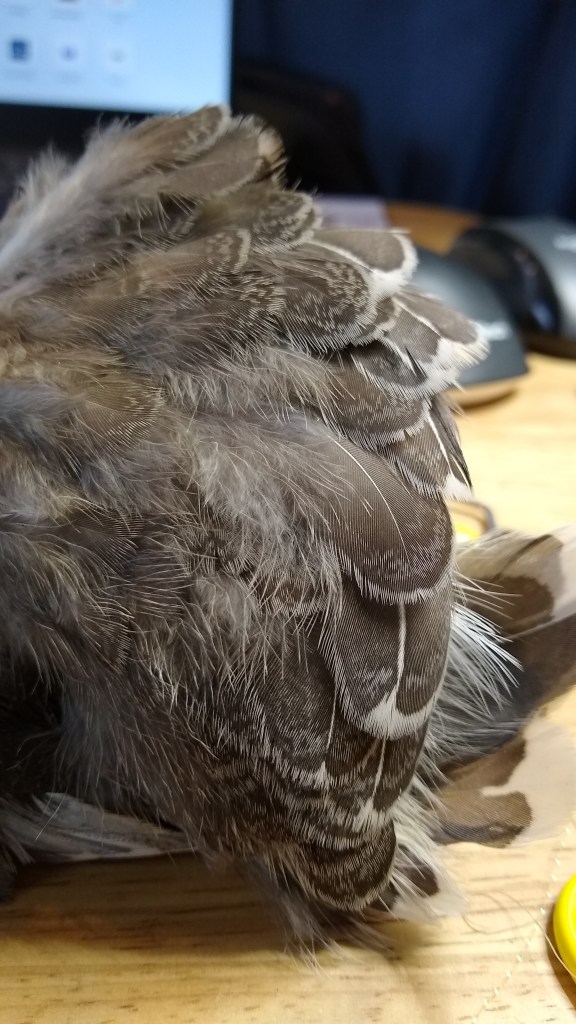
I was on a motorcycle ride up the mountain above Gardiner Montana a few years ago when I passed a hunter that was cleaning a grouse that he had just shot. On my way back down the hill, his truck was gone but I saw the pelt lying there on the roadside. I tossed it in my saddle bag and have tied dozens of flies with it by now. The feathers have gorgeous marking and the wispy webby part moves great in the water.
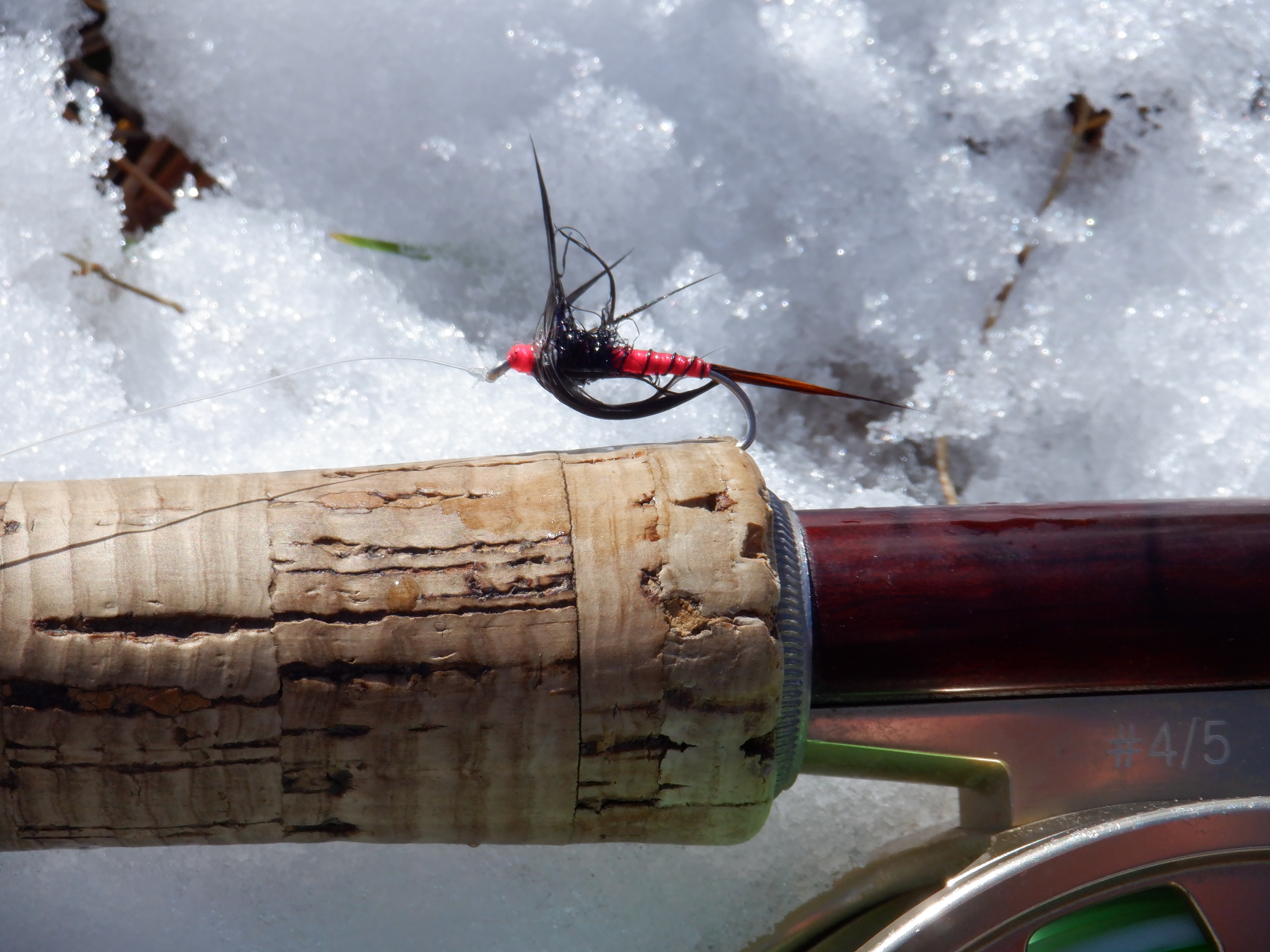
The down and dirty flies have been a lifesaver at times. In 2015, my first Fall season on the Madison, I had been skunked for several days after a great first fish. I got the tip that turned it around from a guy I came across that was catching fish… pink worms, Pat’s Rubberlegs and some eggs!
Pink chenille lashed to a hook just seems inelegant at best and like cheating at the worst. But it isn’t a silver bullet… you still have to put it in front of a fish.

I really don’t enjoy fishing a bobber on a fly rod, but sometimes you have to go there. My rig for the Madison in the Fall is a six weight floating line with a medium sized Thingamabobber. I run four to six feet of 3X tippet to a heavy anchor fly, a rubber legs or a tungsten stonefly with a pink worm or an egg pattern on a 4x trailer 18″ or so behind the first fly.
But it is so much more enjoyable to swing down and across the river after a long cast, and wait for that smashing grab. The last few seasons, I’ve used an OPST Commando single hand-skagit setup on my five weight, which is great fun to cast and I can shoot the thing all the way across the river with little effort. I typically swing two flies under a sink-tip, a lead fly that’s a bigger bugger or large soft hackle, like a size four or six, and a smaller size ten soft hackle on the end.
I carry a second rod with the floating line for bobber-chucking and sometimes swinging flies on a very long leader, like 12-15 feet.
Do you have a favorite fly or tactic for the Madison? Share it with us in the comments below…
 TRAVELINGWITHTOOLS
Leave a comment