
A Trip to the Ruby Lake National Wildlife Refuge
On my way north from So Cal heading back to Montana, I stopped at a BLM campsite in the Owens river valley that had a tiny blue line running through it on the map. I walked for a couple of hours looking for gaps in the willows, and while I was never able to find a spot open enough to make a real cast, each spot I where dapped a small grasshopper pattern had a fish swim up to grab my fly. I had recently watched a YouTube video where a couple of guys flew into a remote Nevada stream and had a great day casting to surprisingly substantial trout, from a creek no more that 3 feet wide. So I had it in my mind to maybe find some water like that on my way across the state.

I planned a stop not far off Interstate 80, south of Battle Mountain, at another BLM camp with a tiny blue line on the map. The Nevada state website said it had rainbow and brook trout in it, so I spent a morning hiking upstream with a 3 weight and handful of hopper patterns. The area had been burnt by a wildfire in 2018, and though the vegetation had mostly recovered, I suspect that the after effects of the fire killed off the fish in the creek. Not a single brook trout showed itself, which to me means there are none to be had. Brookies don’t hide from a grasshopper!
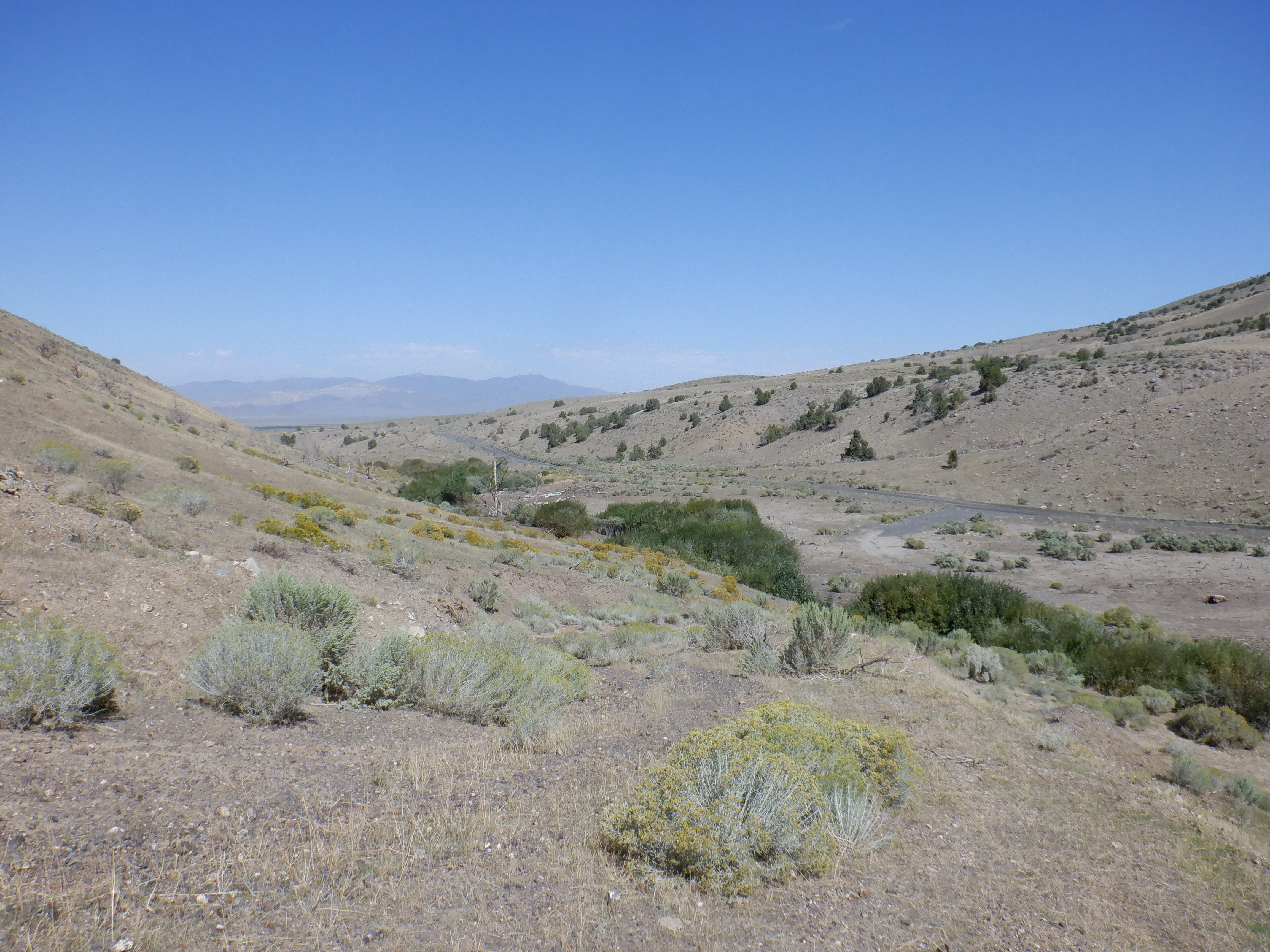
So I continued on my way to Elko and and drove over Harrison Pass to visit the Ruby Lake National Wildlife Refuge. All of the water in the whole valley comes out of springs and sinks back into the earth before leaving the valley, no streams enter or exit. The refuge was engineered to control water flow from over 200 springs, and also stocked with trout from the hatchery on site. I’d heard that the collection ditch has some big fish, and well, I can confirm that it does!
I walked a stretch below the hatchery one afternoon, with a six weight and a size 8 hopper, and wow, what a great 100 yards of water. The sun behind me, I walked softly upstream and cast to try and land the fly six inches or so from the grass, where the fish were tucked into the shadow next to the bank.
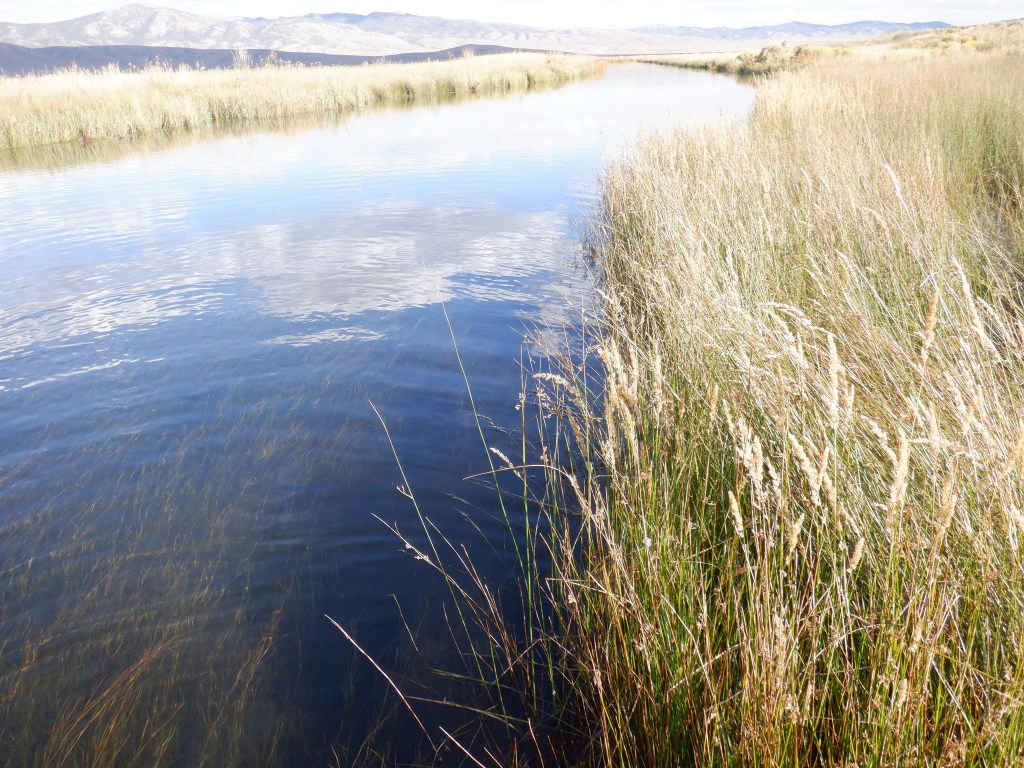
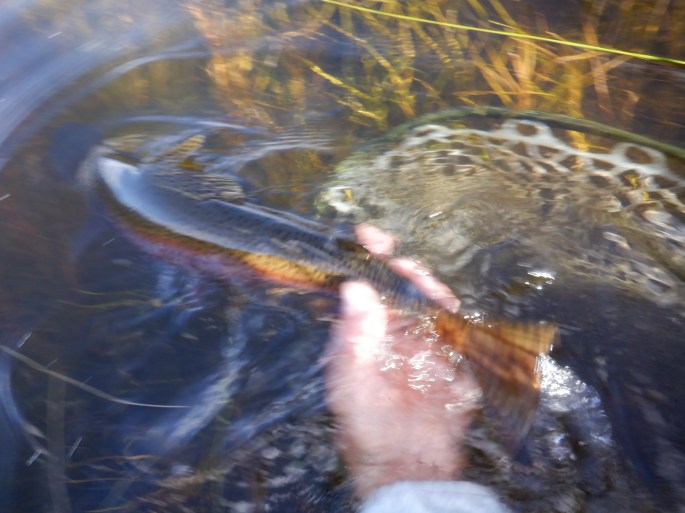
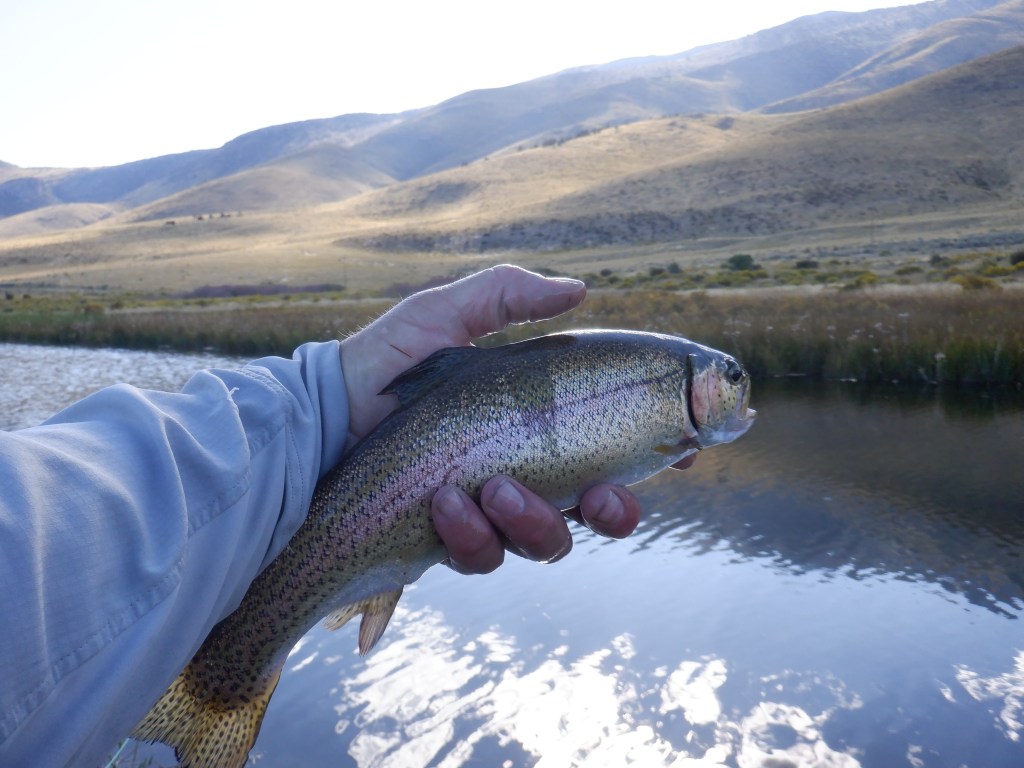
At one point I walked away from the bank to go around a swampy section, and when I returned to the water’s edge, a big rainbow was lazily gliding downstream, not more than a rod’s length away from me. It didn’t spook at the sight of me, so I waited a few moments and then placed a cast 20 feet downstream, inches from the late summer dandelions overhanging the water… Slurp.

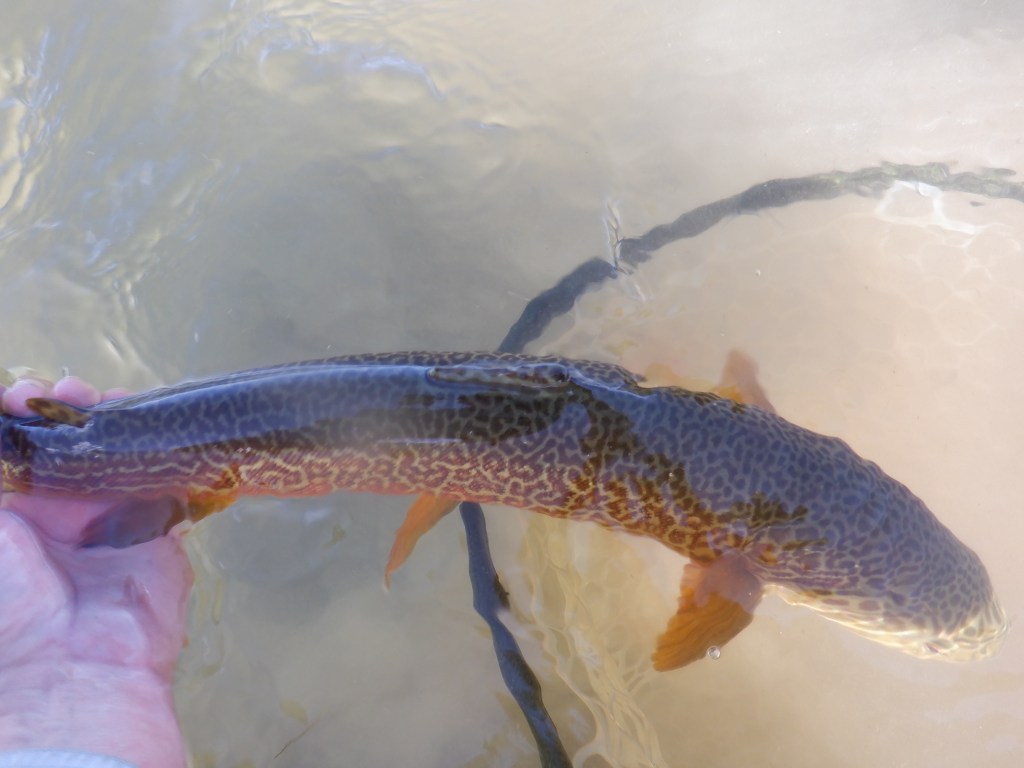
What a fish! It made two strong runs before I was able to slip the net under it, and I was able to land two more just like it within an hour. Really, the best afternoon with a fly rod that I’ve had in a long time.
That was the finale after three previous days, and I had only explored a small portion of the fishable waters.
The collection ditch runs along the west side of the valley, with diversions that feed several marshy areas along the way. It ends at Brown Dike, where there are two culverts spilling the water into different ponds, which appeared to be only a couple of feet deep across their spans. There were several large fish stacked up around the current coming into and out of the culverts, and these fish were very used to people standing there and trying to catch them. They were not easy to fool.
When I first arrived at the dike, the sun had already slipped behind the mountain, and I could only see the rise forms of the fish that were sipping emerging midges. I hadn’t brought any tiny bugs with me, since my intent was to only fish big foam hoppers. On the first or second cast, throwing the hopper at one of the midge-sippers, he ate my hopper! Totally unexpected, and I missed the opportunity, pulled the fly right out of his mouth.

It was not repeated, none of the other fish were interested in hoppers. It turned out that my pack still had a bunch of leftover junk from my trip to the Missouri river, where I was fishing the trico hatch. Tricos are tiny black mayflies, and I figured they might fool a fish eating tiny black midges, so I spent the remaining hour of daylight changing patterns without success.
The next day, I came back prepared with a box of midges and I told myself I’d only try the same spot for a short time, acknowledging that these fish were going to be tough. I tied on a small parachute adams for a sighter and hung a size 20 midge emerger off the back and got no interest. I tried a few different midge droppers and still got no interest, but one fish did grab the adams! I wasn’t able to net it though, I snapped the 5X tippet when the fish tried to escape through the culvert.

I switched over to the other culvert where the fish were not showing themselves, and the overcast sky prevented me from seeing them. Occasionally I’d see a swirl and a fin, so I knew they were in there, but they showed no interest in my dry flies. I had been casting from downstream, trying to stay out of view, but I gave up for a bit and walked up to stand on the culvert just as the sun came out and illuminated the pocket. There were at least six big fish hanging out feeding in the outflow, and one of them was genuinely gigantic!
I finally noticed what it was that they were likely feeding on, as the edges of the culvert were absolutely swarming with tiny grey scuds…
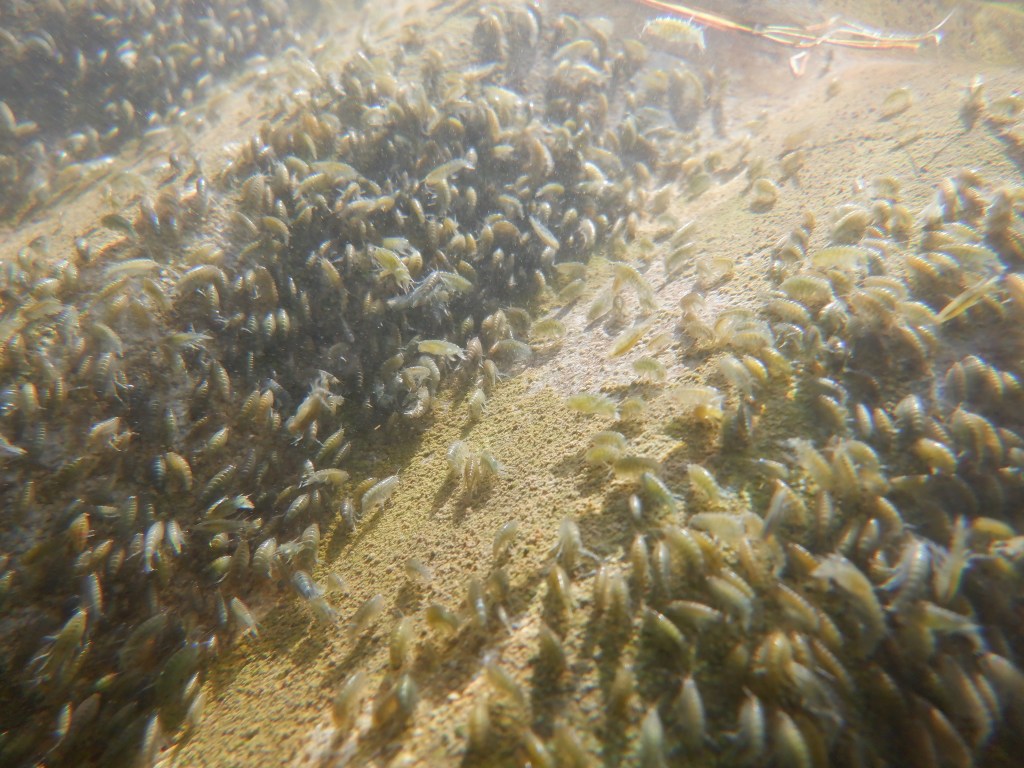
The current was sweeping them right into the path of the fish that were sitting there fat and happy. Now well past the short time I’d intended to spend there, I changed tactics and put on a bobber to try drifting a scud pattern through the slot. I actually had a couple in my pack that were a reasonable close match, and after playing with different depths and weights, I actually got a grab and got the hook into one of the bigger fish in the hole! It jumped at least two feet clear out of the water and my leader broke way up high in the thick portion… Aargh! I must have nicked it on the back cast where I clipped the bathroom building. Damn it.
Well, that was worth it regardless, and I finally gave up on that spot and switched back to big hoppers, which paid off handsomely, with the scene I started with down below the hatchery.
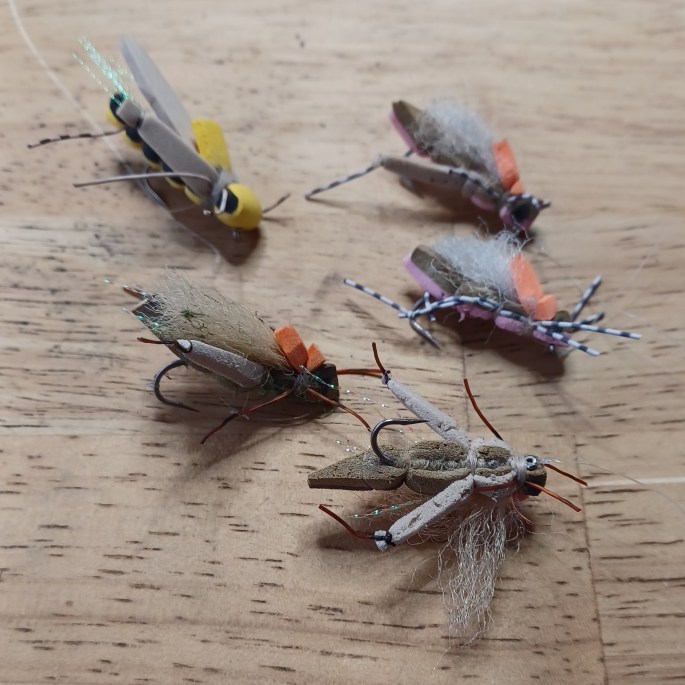
Two other spots that I had enjoyed good action with the hoppers were the Passey Spring area and the ditch below Bressman Cabin. Passey Spring was excellent, as there is wide spot where the ditch expands into a shallow pond that had fish cruising along in the open, and there was no brush to hinder casting.
Bressman Cabin was tougher, with enough openings in the brush and willows to cast from, but I was constantly tangling my fly line in the grabby weeds at my feet. Still, it was worth it. As the sun was dropping behind the mountain on my first day there, one cast dropped my hopper right at the edge of some overhanging willows, and a fish charged it from a mile away, pushing a huge wake across the ditch! It was probably the most exciting grab of my visit, even though I didn’t get that one to the net.
I stopped at the headquarters on my way out of the valley and the helpful ranger behind the desk told me of several other good access points that I hadn’t found. Four days felt about right though. I was ready to move on, and I’m writing this from the banks of the Henry’s Fork in Idaho, preparing to go chase some lake run fish on the Madison in Yellowstone. Life is good.




 TRAVELINGWITHTOOLS
Leave a comment